We won’t get fooled again (we will)

We won’t get fooled again (we will)

Hugely questionable substitutions by Lee Grant in a very disappointing second half gave a competent, disciplined Exeter side the impetus to grab a deserved point to take back to Devon.

The late equaliser, which inevitably came from Town’s left flank where overloads had already increased ominously, put the spotlight back on a manager whose reputation had slightly recovered following wins against some of the lesser lights of the division and a hard-fought, if streaky, point at Lincoln on New Year’s Day.

A very kind schedule had produced 10 points from 12, and it was expected that an eminently achievable 13 from 15 would potentially provide a solid base for a good second half of the season, even if the challenges ahead are decidedly stiffer.

With the Grecians on a decent run themselves, the game was far from a foregone conclusion, but with an hour gone a routine victory seemed well within the grasp of a team rather boringly seeing out a game where the opposition’s threat was a little toothless, despite lots of possession.

However, the visitors grew in confidence as the half progressed, while Town offered less and less and simply didn’t cause enough problems after a reasonably bright start to the second half.

Despite having three well-executed goals, with two very good strikes by each side and a tap-in following a clever move following a good run by Aisha, the first half was a little stodgy and marred by a confusing refereeing performance, featuring possibly the first ever example of a player penalised for heading a raised foot.

Neither side had offered much in the first 15 minutes, with a Harness effort perhaps causing the Exeter keeper more difficulty than it deserved, but the same player struck with an excellent effort not long after, with the goal coming a little out of the blue after 18 minutes of rather uninspiring fare.

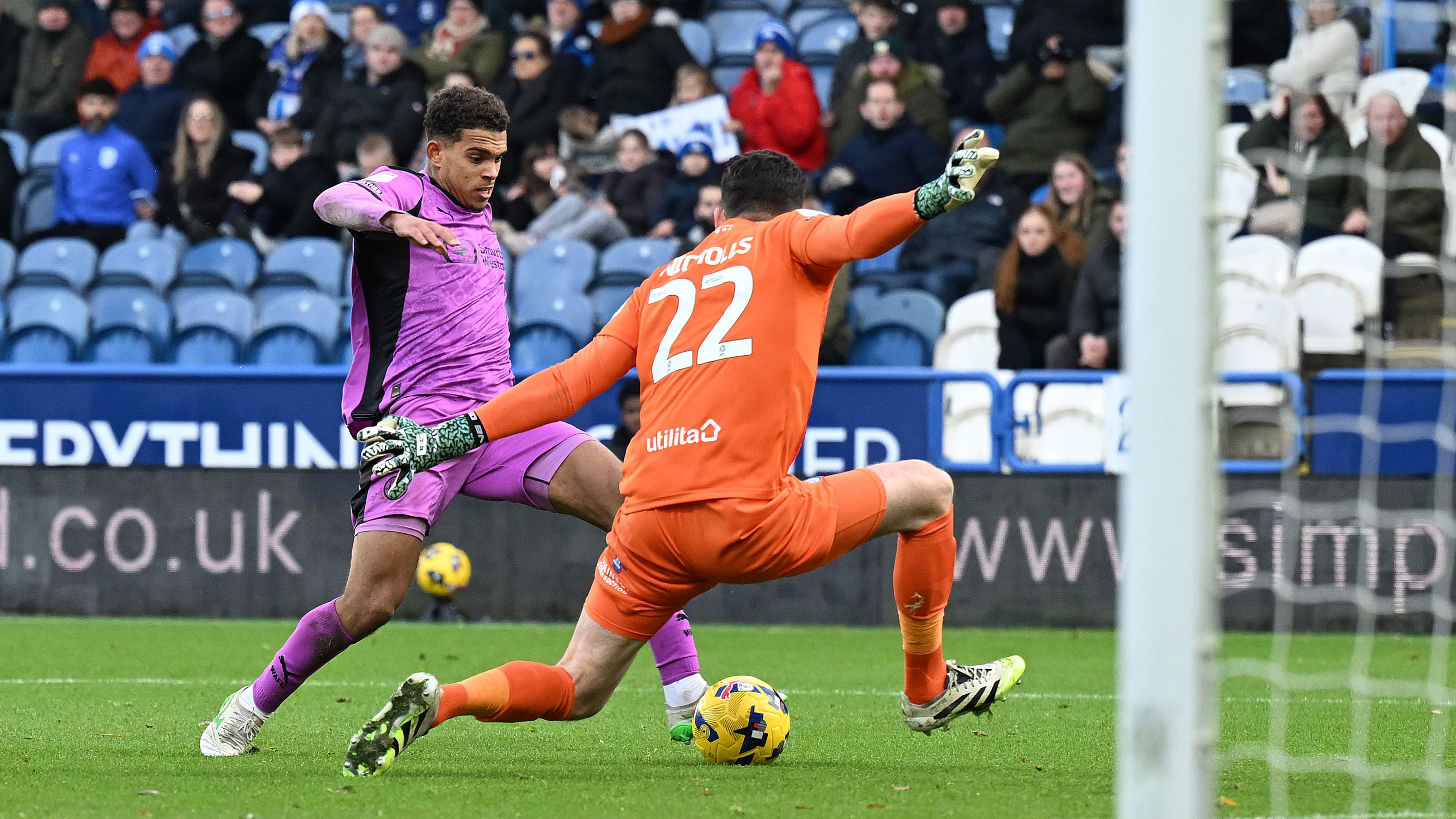
An even better strike a few minutes later saw the Devonians draw level. Picking up the ball, turning, and shooting in one movement, Cole delivered a superb, unstoppable shot past a helpless Nicholls.

It was the visitors’ first sight of goal, but it was difficult to resist the temptation to applaud a spectacular finish.

To their credit, Town regrouped and had their best period of the game, culminating in a Radulovic tap-in following some decent Castledine play and an Aisha run down Town’s right.

Despite the setback of conceding again, Exeter had a quiet competence about them which translated into dynamism twice, giving Town advance warning that, of the teams they were expected to knock over in the festive period, they would prove the most difficult.

Ironically, the first of these dangerous breaks was thwarted in the box and led to Kasumu delivering possibly his only positive contribution of the game, with a thrusting burst towards the visitors’ goal, culminating in a ball to Radulovic who was unfortunate to see his shot take a slight deflection when goal-bound.

Just before half-time, Exeter’s second dangerous break of the half brought a very good save from Nicholls with his feet and, just as he had done at Lincoln with a smart stop, safeguarded what, at the time, still seemed to be three points.

Going in at the break with the lead, on the back of an average but respectable performance, Town needed a solid second half to finalise a hugely successful Christmas and New Year schedule.

Regrettably, the requisite level did not transpire. A brief early flurry subsided as Exeter grasped an initiative which was eventually to bear fruit following a series of poor substitutions by Lee Grant.

He was forced into the first substitution when Roughan picked up an injury in the first half and didn’t reappear after the break. Feeney, his replacement, had an uncertain 45 minutes, which incorporated a ridiculously loose attempted header back to Nicholls that Wareham nearly punished.

However, with Town’s attempts on goal restricted to a poorly executed lob from the halfway line—when May was given the ball by Exeter overplaying—and forays which rather fizzled out on contact with the penalty area, the game changed with Grant’s ill-advised changes.

Removing Gooch seemed particularly egregious, as he had kept Exeter’s right relatively quiet with well-timed challenges and interventions. Grant, however, repeated the experiment of switching the naturally right-biased Sørensen to the left, which added to the increasing problems being faced.

Nor did it seem very smart to take off Radulovic, who had done a reasonable job up front, and put another small forward, Charles, on to play alongside May.

Ledson, whose recent discovery of a modicum of form was rewarded with a place on the bench, did reasonably well in a game which inexorably swayed towards the away side as the minutes passed.

In the 89th minute, Exeter exploited their right-hand side again to feed a ball into the box which was deftly flicked in by Wareham to secure a merited point.

It is possible to overreact to a setback of this sort, but Grant’s ineffective management in a hugely forgettable second half – getting most of the decisions he made wrong – and the rather pathetic blaming of the players post-match, is a problem which isn’t going away.

The level of goodwill Grant earned in the recent good run of results was always puddle-deep, given the weakness of the opponents beaten, and his reversion to the mean in this game, with decisions which appeared odd in the moment and terrible in hindsight, sets him back again ahead of a tough round of fixtures.

The hierarchy, and others, will argue for patience, but that had all but run out before the knocking over of a few hapless opponents and, in any case, they were the ones who set expectations high for this season. A precarious fourth place, with rivals behind having played fewer games and a top three finally showing signs of consistency, should not be a comfort to them.

Happy New Year

Ending the year on the up

Ending the year on the up

With a third win in a row against opposition who could be described as the bad, the grim and the ugly, Town enter 2026 with renewed optimism, sitting in the top six and carrying important momentum that has proved so elusive for much of the season to date.

Lee Grant has now firmly grasped a lifeline thrown out by a very kind fixture scheduler but, like the majority of us, will understand that knocking over these limited opponents will mean little if the much sterner challenges ahead are not met with significantly more success than in the first half of the campaign.

Despite fielding what looked like an overly defensive starting XI, with little guile evident, Grant is managing a packed schedule and could quite reasonably argue that Northampton’s physicality, experienced very recently in a dreadful encounter, had to be matched from the beginning to deliver a result.

He was proved correct in a first half of attrition as a limited but well-organised Cobblers side sought to spoil and disrupt at every turn, with no little success apart from a bright ten-minute period for the hosts which created pressure and chances, including a spectacular overhead kick by Balker that was very well saved.

Castledine, possibly in his final appearance, should have done better with an opportunity at the end of the best move of the half as May and Sorensen combined well down the right.

Wallace, excellent throughout, along with the much-improved Low and Balker, rather easily snuffed out the little threat carried by the visitors and built a good platform for Town’s greater quality to come to the fore, while Kasumu and Ledson worked hard to win the midfield battle.

The sole moment of concern was a missed chance at the back post from a flick-on, which served as a warning that if their limited opposition could sneak a lead, the task ahead would have been magnified.

The increasingly annoying tactic of a mysterious goalkeeper injury was, predictably, employed, allowing the visitors some breathing space and new instructions. Had Town not done exactly the same in other games, they could have legitimately complained, but pot, kettle, black applies.

Just as Northampton looked like thwarting their previously free-scoring hosts, Town took the lead shortly before the break when Low stayed forward and was left all alone to connect with a very good Sorensen cross, which he despatched nicely with a downward header.

The simplicity of the goal will undoubtedly have hugely annoyed Nolan, the visitors’ manager, who saw 45 minutes of resilience and dark arts ruined by a lack of concentration and organisation.

It was a little surprising that Low was replaced at half-time by Roosken, with Roughan moving to a more defensive role. Whether it was a tactical move, injury, or planned management of his game time, the oft-criticised Low had completed his best half of football for some time.

Taking the advantage into the second half in the context of a tough, uncompromising contest reduced pressure on Town, forced Northampton into greater adventure and opened up a dour encounter, albeit only to an extent.

For all the Cobblers’ obduracy, Town should have wrapped up the points on several occasions in a slightly more entertaining second half, with both strikers guilty of bad finishing.

First, Alfie May was on the end of an excellent Roosken cross but, as he had done at Exeter, his connection was rushed and inaccurate, with the ball flying over. The front man has made some good contributions in recent games since being restored, but scoring goals is what he is paid for and more are required.

However, great work by May on the byline to set up Radulovic should have earned him an assist, but the Serb got his finish wrong and his attempted clip cleared the bar harmlessly from close range.

Roughan then found Castledine with a great ball into the area, which he took down well but mishit his strike to force only a routine save when he should have scored.

The importance of a second goal was emphasised late on when a push in the back of Roughan went unnoticed and allowed Swyer to bear down on Nicholls before Balker slid in with perfect timing to quell the danger.

Other than that, threats from the visitors were sporadic and unconvincing, but it only takes one slip or stroke of luck. There was a brief period when Town were penned back and conceding too many set pieces.

Ironically, the elusive second goal came when Northampton were trying to apply pressure. A long clearance by Harness from an attempted cross was fought for and won by substitute Charles, who did very well to resist the attentions of two defenders before rolling the ball into the path of Radulovic, who sealed the three points.

Despite the limitations of the last three opponents – and Northampton were easily the best of those – this was the type of game Grant and his team were losing or failing to win earlier in the season, and not so long ago, so progress is being made.

Having, hopefully, learned how to despatch the lesser lights of a generally poor division, the vital next step is to compete with nearer rivals, and they could hardly face a tougher test than in-form Lincoln at the dawn of 2026.

Grant has faced justified criticism this season, and questioning the advisability of appointing a manager with no experience and too much control remains valid, but he deserves some praise for a revival in fortunes, however bad, grim or ugly the opposition.

He now needs to double down and motivate a deep, highly paid squad to turn around their underachieving season in the second half. We really shouldn’t be viewing Lincoln City – admirable as their marshalling of more limited resources has been – as a mountain to climb, and the same goes for Bolton, Stockport and Bradford, who are all on the horizon.

Time to start truly punching our weight.

Town hammer the not too Valiants

Town hammer the less than Valiants

Three bursts of intensity buried an abysmal Vale side to give Town a potential platform for an assault on this mediocre league in 2026.

One game remains of a dismal 2025, with another win on home soil surely within fairly easy reach for a confident squad finally showing their obvious, but so far almost entirely elusive, quality.

The uncertainty of Castledine’s loan spell is the only cloud in the Terriers’ immediate future. His blossoming talent has come to the fore in the past few weeks, providing threat, goals and genuine excitement to a labouring team desperate for a turning point.

Following hot on the heels of the equally rancid Rotherham, the visitors from the Potteries provided the perfect opposition for a manager whose career looked to be hanging by a thread just two weeks ago, as they duly rolled over for a festive thrashing.

Starting quite brightly, Vale had their best spell of the game in the opening three minutes and saw a Waine effort hit the side netting before their hosts had woken up.

It didn’t get any better for them in the next 87 minutes and, once they allowed Castledine to run at them without challenge following a ball from Harness, who had won a midfield battle, the Chelsea loanee steered home an easily placed shot to give Town a lead they never looked remotely like losing.

Within ten minutes, that lead was doubled when Castledine, who was in the thick of everything, was fouled on the left and Ledson got in front of the flimsy Vale defence to flick home.

It should be said that the referee, who let a lot of debatable challenges go throughout, missed a possible foul on the halfway line before the phase of play which led to the goal, but there was little stopping this revitalised bunch.

No stopping them until, that is, there was, and after the second goal went in, Town entered one of their rather weird flat periods, during which time little happens. The danger is that against more capable opponents, the drop-off can and will be punished.

Just before the half hour, however, Town stepped up the pressure again and Vale had to face a torrid final 15 minutes.

Eventually, the pressure paid when Castledine was again allowed to run at the beleaguered visiting defence and his deflected shot could only be parried by Amos into the path of Radulovic, who tucked it away with ease.

The overworked keeper had to be alert to a flicked header from May, which looked bound for goal, and smartly blocked the same opponent’s attempt to set up a colleague from the byline after following up on a weak stop from a Gooch shot.

Gooch in particular tormented the visitors and one fabulous run and pull-back set up Castledine for a snap effort, only lacking enough power to test the rather flaky Amos in Vale’s goal.

That effort was the final assault on the traumatised visitors, who were probably thankful for only being three down, definitely relieved to be going in to regroup and, you would imagine, looking forward to Darren Moore’s inspirational team talk.

A half-time switch by our erstwhile coach gave the Valiants more of an aerial presence, if not threat, in the second half, but two early and quite fabulous goals sealed their fate before they had any chance to readjust.

The first, Town’s fourth, came as a result of a carelessly conceded corner when Low got into a curious mess trying to play the ball back to Nicholls from near the touchline, only to skew it over the dead-ball line.

Vale’s attempt at a short corner was easily repelled, as was the second phase following the initial clearance. Gooch carried the ball out of the area and found Radulovic, who raked a perfectly weighted cross-field pass to Roughan, who had a lot of acreage in front of him.

Accompanied by May overlapping on his left, the Irishman waited for exactly the right moment to set up his colleague, who placed his shot past Amos with ease.

Even better was to come when an incisive, fast raid involved Balker winning the ball, Ledson moving it on to May who, in turn, found Castledine to maraud forward yet again.

His ball into Radulovic found the Serb with his back to goal, but he returned the ball with a flick into the path of Castledine’s continuing run, allowing him to take it in his stride and stroke it into the top corner for a quite excellent finish.

Who knew that quick, incisive passing and getting the ball forward rapidly to two strikers, supported by progressive midfield players, would bring success?

Pragmatically, Grant made four substitutions after the hour, with the excellent Radulovic being replaced by Charles, followed ten minutes later by the withdrawal of the other main architects of Town’s emphatic win in Gooch and Castledine.

A change of shape allowed Balker to withdraw, though Roughan at left-back with Roosken in front of him reduced Town’s threat down that side (Ashia’s late cameo confused things further), though Sorensen added something different down the right.

Understandable as the changes were, they immediately disrupted Town’s flow and the game as a spectacle suffered. A nicely weighted Alfie May cross to the far post, headed over by Sorensen, and a clever run by May which nearly created an opening were the only bright spots of the final 20 minutes.

Churlish to complain, perhaps, after a five-goal victory, but the paucity of entertainment on offer throughout this calendar year perhaps deserved to be recognised with the side in relatively sparkling form. Hopefully, curtailing the rather disappointing crowd’s entertainment will pay dividends in the crowded days ahead.

More importantly, Grant’s belated but welcome conversion to a shape allowing two strikers, and a reduction in the sterile passing around the back, seems to have created momentum. Losing Castledine will be a blow if it happens, but we should never become attached to loan players.

The platform for a successful season should now be in place.

Happy New Year everyone.

False dawn klaxon?

False dawn klaxon?

Somehow, Lee Grant has survived yet another run of poor results with an expensive, misfiring squad still searching for form and consistency in a league of muddled mediocrity, but now handed a set of extremely favourable fixtures.

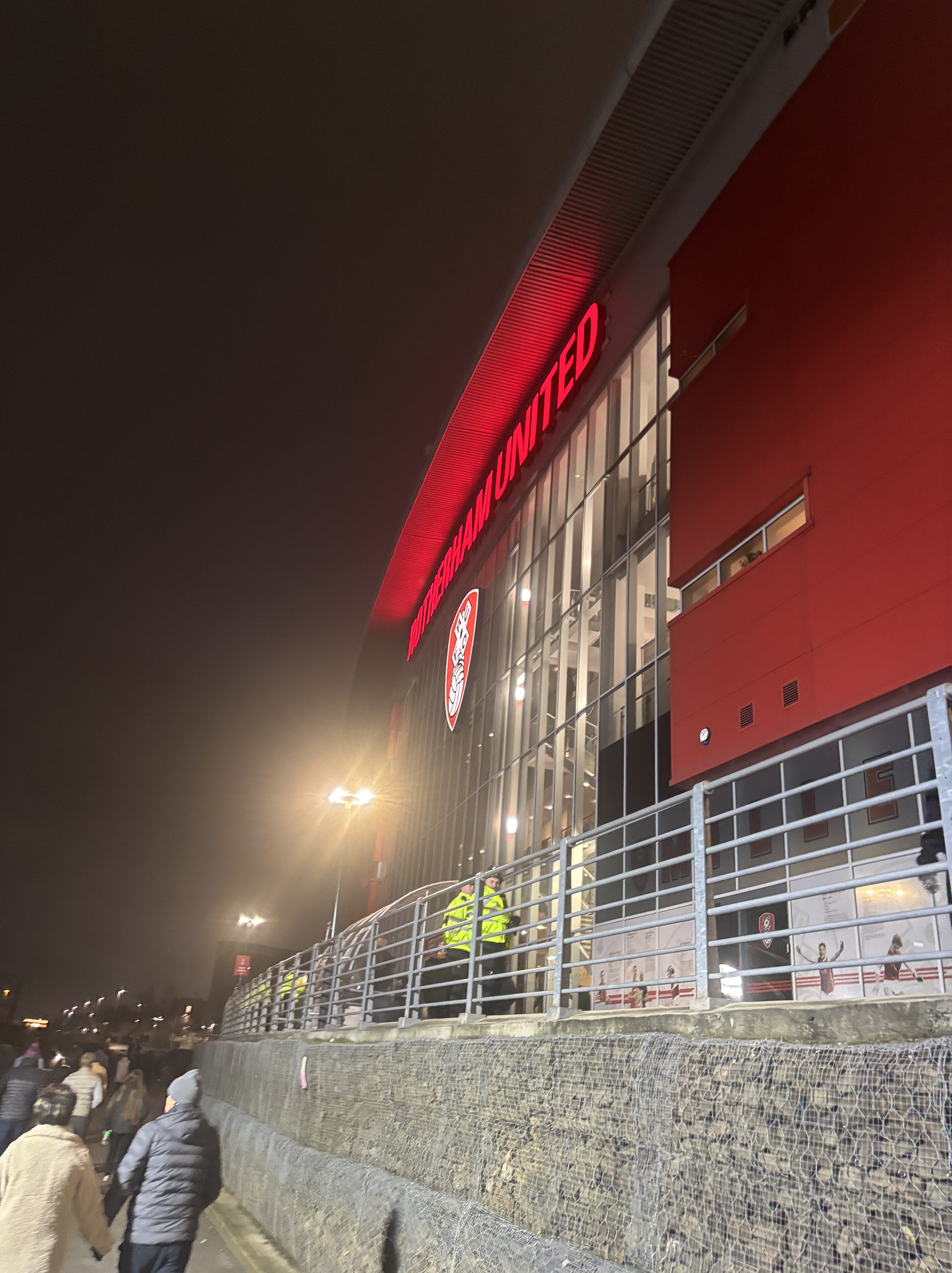
First up was a visit to the New York Stadium to face a Rotherham United side in even worse shape, emerging from a disastrous Steve Evans era – a perfect example of never reheating a soufflé.

Two fed-up fanbases gathered in a half-empty stadium. The visitors were reduced to offering pay on the day just months after taking over 4,000 to South Yorkshire, and both sets of supporters hoped forlornly for an upturn in fortunes. Expectations, though, were dulled in a dreadful opening 20 minutes devoid of quality.

Charitably, Town might have been “earning the right” to play at a ground they last won at nearly nine years ago, and they had to survive a scare when Nicholls, for some reason, allowed a corner to sail over him to the back post, only for the referee – overly fussy throughout – to intervene.

That proved to be the Millers’ only real threat until the dying embers of a game they comprehensively lost, undone by one of those familiar, tantalising bursts of cohesion from the Terriers that brought three well-worked goals.

We have been here before. The inherent quality in Town’s squad occasionally bubbles to the surface, sometimes bringing reward but mainly against the division’s poorer sides.

The first spark saw Radulovic head straight at the keeper from a decent Gooch cross, but better was to follow.

In the 26th minute, Castledine played an excellent ball forward, controlled instantly by Radulovic’s chest to take him into the area, before he picked out Gooch, who clipped home the opener.

Town scented blood and, four minutes later, Castledine again drove play across the pitch before finding Gooch. His forward ball, probably meant for May, instead found the Spanish-Serb, who executed a beautiful lob over Dawson.

The hosts were sunk before the break. Once more, Castledine’s determination kept possession high up the pitch, Gooch collected on the right, and his cross was met by the unmarked Castledine to head home yet another goal of his loan spell.

That gave Gooch a goal and two assists as Town’s first-half dominance brought reward -and much-needed relief – for the beleaguered Grant. His overdue pairing of Radulovic and May had worked perfectly, even if May’s main contribution was largely in the press.

The least said about a turgid second half the better. Rotherham’s often comically incompetent attempts to claw their way back provided only accidental entertainment.

Town were content to sit deep and soak up what their blundering opponents could muster, which was very little, and poorly executed.

There was little to enthuse the travelling support, though Radulovic nearly grabbed a fourth when he latched on to a long ball. Dawson blocked, but the rebound fell to substitute Charles, who might have done better than shoot too close to the keeper.

Annoyingly, a long-overdue clean sheet was lost at the death when Nombe took advantage of hesitant defending by the otherwise much-improved Low and Balker to fire past Nicholls. It was their first shot on target.

Still, it was a well-deserved win, and with three of the next four games favourable, this run may yet become Grant’s pivot as 2026 looms.

His failure to build on previous flashes of hope, and the more ominous inability to beat sides in the top ten, do not augur well. But the chance remains for him to rescue a stalling Huddersfield Town career that seems to survive mainly for want of an available alternative.

Merry Christmas all.

False dawn klaxon?

False dawn klaxon?

Somehow, Lee Grant has survived yet another run of poor results with an expensive, misfiring squad still searching for form and consistency in a league of muddled mediocrity, but now handed a set of extremely favourable fixtures.

First up was a visit to the New York Stadium to face a Rotherham United side in even worse shape, emerging from a disastrous Steve Evans era – a perfect example of never reheating a soufflé.

Two fed-up fanbases gathered in a half-empty stadium. The visitors were reduced to offering pay on the day just months after taking over 4,000 to South Yorkshire, and both sets of supporters hoped forlornly for an upturn in fortunes. Expectations, though, were dulled in a dreadful opening 20 minutes devoid of quality.

Charitably, Town might have been “earning the right” to play at a ground they last won at nearly nine years ago, and they had to survive a scare when Nicholls, for some reason, allowed a corner to sail over him to the back post, only for the referee – overly fussy throughout – to intervene.

That proved to be the Millers’ only real threat until the dying embers of a game they comprehensively lost, undone by one of those familiar, tantalising bursts of cohesion from the Terriers that brought three well-worked goals.

We have been here before. The inherent quality in Town’s squad occasionally bubbles to the surface, sometimes bringing reward but mainly against the division’s poorer sides.

The first spark saw Radulovic head straight at the keeper from a decent Gooch cross, but better was to follow.

In the 26th minute, Castledine played an excellent ball forward, controlled instantly by Radulovic’s chest to take him into the area, before he picked out Gooch, who clipped home the opener.

Town scented blood and, four minutes later, Castledine again drove play across the pitch before finding Gooch. His forward ball, probably meant for May, instead found the Spanish-Serb, who executed a beautiful lob over Dawson.

The hosts were sunk before the break. Once more, Castledine’s determination kept possession high up the pitch, Gooch collected on the right, and his cross was met by the unmarked Castledine to head home yet another goal of his loan spell.

That gave Gooch a goal and two assists as Town’s first-half dominance brought reward -and much-needed relief – for the beleaguered Grant. His overdue pairing of Radulovic and May had worked perfectly, even if May’s main contribution was largely in the press.

The least said about a turgid second half the better. Rotherham’s often comically incompetent attempts to claw their way back provided only accidental entertainment.

Town were content to sit deep and soak up what their blundering opponents could muster, which was very little, and poorly executed.

There was little to enthuse the travelling support, though Radulovic nearly grabbed a fourth when he latched on to a long ball. Dawson blocked, but the rebound fell to substitute Charles, who might have done better than shoot too close to the keeper.

Annoyingly, a long-overdue clean sheet was lost at the death when Nombe took advantage of hesitant defending by the otherwise much-improved Low and Balker to fire past Nicholls. It was their first shot on target.

Still, it was a well-deserved win, and with three of the next four games favourable, this run may yet become Grant’s pivot as 2026 looms.

His failure to build on previous flashes of hope, and the more ominous inability to beat sides in the top ten, do not augur well. But the chance remains for him to rescue a stalling Huddersfield Town career that seems to survive mainly for want of an available alternative.

Merry Christmas all.

It’s Over

It’s Over

The latest in a litany of errors and missteps during Kevin Nagle’s tenure is surely about to come to a head, with Lee Grant heartily booed by a worryingly thin crowd, thoroughly unconvinced by a novice manager cruelly exposed in a tough, demanding league.

After a bright, if not wholly convincing, start that featured four wins in August and encouraging League Cup performances, the deterioration in form and results has placed Grant in an ominous and likely untenable position, with Nagle facing yet another managerial crisis.

It would not be especially surprising if the owner were to show erroneous patience with the latest of his long list of coaches and managers, given his previous obtuseness: the sacking of Duff earlier this year was premature, the dismissal of Moore took far too long, and the farce of his Warnock dealings will demean his legacy whatever is in store for the club in the future.

A new sound system will not drown out the rancour of a bruised fanbase yearning for some basic competence.

Having endowed Grant with very significant power to rebuild a failing and unpopular squad without the guiding hand of a sporting director in his first senior management role, Nagle took an extraordinarily high risk that has backfired spectacularly.

Perhaps an experienced number two could have helped his fledgling recruit, but the overwhelming suspicion is of a young man too wedded to coaching theories, with a lexicon increasingly baffling to a support yearning for bold, risk-taking excitement – a far cry from Nagle’s ill-advised “Northern Football” epithet.

Should this home fixture against a capable, if unspectacular, Wigan Athletic prove to be Grant’s last — which it surely must — the dull and pedestrian second half that pushed the crowd into visceral displeasure rather neatly summed up his Huddersfield Town career.

By any definition, and even accounting for the never-ending injury list, this squad should be capable of competing at the right end of what is proving to be a mediocre division, and there are few, if any, excuses for Grant’s failures on multiple levels.

Reasonable performances have been thin on the ground and mainly consist of 20-minute spells when players offer a glimpse of their potential, punctuated by extremely sloppy defending, ill-discipline and an on-field cluelessness pervading a seemingly confused and unconfident group (it will be a relief not to hear the word “group” again and should be a prerequisite for the next mug through the doors).

Having adopted a new back-three approach – seemingly out of nowhere, but probably in reaction to an awful performance at Luton, where a 15-minute spell of decent play was not enough to compensate for a bizarrely narrow and inappropriately staffed midfield – Grant restored former prolific scorer Alfie May to the front two.

Rather than pairing him with the limited but tall Radulovic, he was placed alongside the prolific spurner of chances, Charles, fresh from blazing several opportunities into the Northamptonshire skies.

Veteran Murray Wallace operated on the left of the back three, with Low central and Balker on the right, and could easily have been sent off seconds into the game when he followed through on Fraser Wallace, leaving the Wigan man in a heap. Consulting his linesman first, the referee showed the Scot a rather generous yellow card, much to the chagrin of the visitors.

It was the first of several dubious decisions favouring the home side, but Town laboured to take advantage, despite some good prompting from Gooch down the right, who had a progressive first half before failing to have any impact in the second. Several good crosses found far too few bodies in the box.

A drab first half looked likely to end goalless until it briefly picked up in the final 15 minutes, with the home side making a breakthrough when a generous free kick for a challenge on Castledine was swung in by Gooch onto Wallace’s head. The reprieved centre-back headed down and well, giving Wigan’s keeper no chance.

The lead was not particularly deserved but did prompt the visitors into more adventure than they had previously risked, with one excellent ball into the box badly miscued when a better connection could have tested the under-employed Nicholls.

As the half came to an end, a robust – and possibly illegal – challenge by Roughan on an opponent was waved on by the ever-generous official and led to an excellent Ledson effort which was, unfortunately, too central and tipped over reasonably comfortably by the appropriately named Mr Tickle in the Lancastrians’ goal.

So far, so good for the beleaguered Lee Grant, with a one-goal advantage over a well-organised but not especially dangerous opponent.

His fate, however, was sealed by a poor second half in which the lead was quickly relinquished by way of a long ball behind Gooch on the right, the fatal hesitancy of joint number one Nicholls, and his invitingly open legs.

Raphael slotted home what was far from a masterpiece, but the same player struck an excellent curling shot onto the bar not long afterwards, which would have confirmed the worst fears of an increasingly restless crowd.

Being pegged back sapped the already low confidence of the home side and, despite occasionally threatening the visitors’ goal, such attempts were few and far between. Low should have done better when free at a corner, Charles comically miscued a header in a good position and substitute Radulovic forced a half-decent save from Tickle with a good effort, but Wigan should really have taken greater advantage of their hosts’ frailty and the crowd’s displeasure.

Grant’s belated substitutions then began. The switches of Ledson for Kasumu and Sørensen for Gooch were reasonable decisions, if too late, but withdrawing Castledine for Wiles and Radulovic for May (instead of Charles) enraged the crowd and appeared to be the actions of a stubborn, tone-deaf manager.

In search of a saviour, Ashia was brought on for a mere four minutes – another vexatious decision in the eyes of a stadium now brimming with resentment.

Low and diminishing crowds, mediocre football, mid-table obscurity beckoning despite a top-two wage bill, unfathomable managerial decisions and yet more wasted money compensating failure make for a very poor report card once the sheen of infrastructure developments fades as we languish in our lowest league position for years.

Grant’s nascent managerial career looks likely to be in tatters, and yet another rebuild will now be undertaken should he depart.

It is to be hoped that Chris Markham has both the connections and the credibility to attract the right person to finally revive this stagnant football club – and the wisdom to ensure that Mr Nagle has no influence over the choice ahead of them.

Treble Trouble

Treble Trouble

Calamitously poor defending from Huddersfield Town overshadowed some encouraging positives in a hugely frustrating performance against AFC Wimbledon.

Sadly for manager Grant, most attention will focus on his decision to bring back Goodman in goal ahead of the experienced and more competent Nicholls, who has been markedly improved since regaining the keeper’s jersey. Errors in successive games have contributed to the loss of three, possibly more, points.

This will overshadow a rare and successful half-time intervention that produced a more convincing attacking display, with Gooch moving to right-back and Wiles – who always seems to deliver from the bench – replacing Sorensen.

The Dane may have been punished for a blind pass into the middle of the park which indirectly led to Wimbledon opening the scoring. It was massively against the run of play but portentous in its execution, as several opportunities to either stifle the attack or pick up runners were ignored.

In a first half where Town largely flattered to deceive -creating too little despite plenty of progressive possession – a counterpunch was not exactly unforeseeable. With Balker outmuscled, Roosken out of position and making no effort to recover, and a general failure of anticipation as the ball was played in, a well-executed Wimbledon attack was generously assisted by the hosts.

Town hit the bar with a glancing Ledson header, and Charles should have done better when a superb ball from Gooch, cleverly dummied by Ashia, found him unmarked in the area – only for him to shoot straight at the advancing keeper rather than show composure and take it around him.

On his full league debut, Ashia ran directly at the Wimbledon defence and carried the team up the pitch effectively at times, though his decision-making still needs refinement. Throughout, however, he was involved in most of Town’s more convincing moments of play and, after many complaints about teams playing backwards too often, his forward intent is surely to be encouraged.

The youngster inadvertently assisted Town’s equaliser very early in the second half—swinging and missing at a clearance that squirted fortuitously through to the influential Castledine, who placed an excellent shot into the corner.

Such an early strike should have set the hosts up for a comfortable victory against a side who had scored from their only genuine first-half attack. But Grant’s goalkeeper decision – one that many viewed with puzzlement – came back to bite him for the second game in a row.

Almost immediately after the relief of drawing level, Balker committed a poorly judged foul, climbing all over his opponent for reasons best known to himself. The position of the free-kick didn’t appear especially dangerous.

Sedona struck a well-placed but not particularly powerful shot to Goodman’s right, but instead of turning the ball away for a corner or even holding it, Goodman spilled it into the path of Orsi – to the evident and righteous fury of both Gooch and Ledson.

The error surely ends Goodman’s brief reclamation of the No. 1 spot, and it is arguable that aiding the development of a Crystal Palace loanee at the expense of Chapman is now too detrimental. If contractually possible, he should be returned to Selhurst Park in January.

To Town’s credit, the setback didn’t halt their momentum. Both flanks, aided by a strong Wiles performance in midfield (one ludicrously bad misplaced pass aside), repeatedly tested the visitors. Ashia’s contributions became more incisive, while Gooch, Castledine and Wiles combined cleverly on the opposite side.

After another good Castledine effort struck the outside of the post, a run and cross by Ashia was narrowly missed by Radulovic in the centre before being collected by Gooch, who dinked a perfect ball for Wiles to head home Town’s second equaliser.

Surely now Town would capitalise? They were clearly the better side, with better players, and had all the momentum.

Sadly, more defensive frailty undermined that notion. A cheap free-kick was conceded by Roosken, and from the delivery Johnson towered over Balker – having had a run on him – to score Wimbledon’s third and maintain their astonishingly high conversion rate.

In normal circumstances, Town’s third and final recovery from going behind would be lauded. But the nature of the concessions meant the crowd were in no mood for forgiveness for a team making far too much of a habit of letting them down.

Nevertheless, the attacking verve of the second half deserves recognition. After being booked for tripping over the ball in the box – interpreted as simulation by an otherwise competent referee – Ashia delivered another excellent cross after a probing run, which Radulovic should have buried. Fortunately, Bishop in the Wimbledon goal could only parry the header, and substitute Alfie May pounced to finally add to his meagre season tally.

Another flap at a corner by Goodman in the final moments of injury time threatened further calamity, but a point was the least Town’s performance deserved.

However, Goodman’s error casts a long shadow over the match, with Grant’s decision-making under further scrutiny and, perhaps, now sitting at the top of Chris Markham’s inbox following the long overdue appointment of a Sporting Director.

The positives shouldn’t be overlooked – particularly Gooch, Castledine and Ashia – as there is undoubtedly talent in this squad, which is competing in an unusually substandard league. But harnessing that talent into consistency remains elusive for Grant.

An excellent Stag do

An Excellent Stag Do

For 30 minutes, Huddersfield Town excelled in murky Nottinghamshire, obliterating Mansfield Town by scoring three times in 15 minutes—and they could quite easily have doubled that tally with a genuinely thrilling display.

Continuing with two strikers, a high and aggressive press, and playing out from the back with menacing purpose, the Terriers followed up an encouraging performance against a very poor Plymouth side with a clear step up in quality against opposition of a far higher standard.

Lee Grant appears to have stumbled upon a team and a formation that works, built on partnerships throughout the side who, finally, appear to be more than the sum of their parts—though the renaissance is still young and faces stern challenges in the near future.

With a league as unpredictable as League One is proving to be this time around, Town’s poor form of just a few weeks ago has caused less damage to their prospects than it perhaps deserved, and a huge opportunity is now opening up for them.

At least three of yesterday’s substitutes would walk into any side in this division, and that depth is likely to expand in the coming weeks. Grant must use it more judiciously than previously, turning it into an advantage rather than confusion.

Of the players who shone through the November gloom at Field Mill, Radulovic, Charles, and Balker were all surplus to requirements until stepping up very recently, but they were key to a thoroughly satisfying afternoon.

The front two combined superbly, with Radulovic performing more intelligently than ever before and rarely erring, while Charles’ undeniable energy translated into one of the most effective striker performances from anyone this season, as his drought now looks firmly behind him.

With the blossoming partnership of Ledson and Harness, a left side considerably improved by Miller teaming up with Roosken, and the hugely impressive Balker slotting in alongside the potential of Feeney, it felt like watching a team rather than sporadically performing individuals.

A few minutes of early home pressure were easily quelled before the Stags were eviscerated in a devastating spell of quite sublime play which few, if any, divisional rivals could have resisted.

Any thoughts the home side had of imposing themselves dissolved in the fifth minute when Balker strolled unchallenged for a third of the pitch, executed a drag-back to foil the first challenge, and fired a ball into Charles, who fed Roosken on the left. The Dutchman held the ball before laying it into the path of Miller, who delivered a perfect back-post cross for Radulovic to head past a despairing Roberts in the Stags’ goal.

Almost immediately after the opener, Harness robbed a home player and fed Ledson who, in turn, found Wiles, who quickly moved the ball on to Charles. He set up Miller for a shot that was comfortably saved, but the visitors were cranking up their dynamism and a second goal was only minutes away.

Harness again won a midfield battle, again playing the ball to Ledson, who yet again found Wiles. This time Radulovic met the next pass before laying the ball into Charles’ path, and he beat the keeper from around the penalty spot.

The carnage wasn’t over for the shell-shocked hosts, as a great curling ball from Radulovic found Sørensen with acres of space to run into. The Dane’s shot took a deflection that deceived Roberts, but the scintillating visitors fully deserved to be three up.

Indeed, had Miller converted at the end of yet another superb move which he himself started with a scything run up the pitch, had Balker kept a header down from an excellent corner, and had Charles stayed onside to tap in a keeper spill, the scoreline would have been extraordinary.

A spectacular speculative effort by Charles is also worthy of recall.

Perhaps unsurprisingly, the 60 minutes that followed such carnage were prosaic in comparison, but it is in that first half-hour where the hopes for Town’s season lie. Exhilarating dynamism thrilled an away support who were not to witness a goal at closer quarters in the second half, but who left entirely satisfied by the promise on display.

It was slightly disappointing to concede a preventable goal midway through the second half, when the otherwise excellent Feeney misjudged a ball and allowed Will Evans to give Mansfield brief hope. It lasted only a few minutes before Goodman picked up an obviously fake injury (the man had one save to make in the whole game) to facilitate a tactical break. This gamesmanship needs stamping out.

Overall, it was a quiet second half. Mansfield, a very decent side at this level, toiled away largely in vain, while a couple of good efforts from Miller and the returning Evans were the closest Town came to removing any vestige of doubt over the result.

An excellent start to an important and challenging week, setting Town right back in the mix—and the growing optimism must now be translated into a good run of results. The ability of this squad to gain momentum was clearly demonstrated in the first 30 minutes of this game; let it be a catalyst for better times.

Town sink poor Pilgrims

Town Sink Poor Pilgrims

Sometimes, adversity becomes the mother of invention, and Town’s familiarly dire list of injuries finally forced Lee Grant to make changes that have seemed glaringly obvious for weeks — particularly playing two men up front. After a mensis horribilis in October, an early winter revival may have begun.

It has helped enormously that the first fixtures of the month have been against deliberately weakened opponents in Mansfield, and a Plymouth side whose performance was an insult to the 1,200 Devonians who travelled a long way to witness it.

At least three of Grant’s starting choices were players with no obvious future at the club just a few short weeks ago: the previously less-than-lethal front two and the permanently fragile Balker, while the squad on duty contained a majority from last season’s miserable campaign.

Town, perhaps carrying some momentum from the relatively straightforward dismissal of Mansfield in the Vertu Cup days previously, began on the front foot and forced some early corners. However, it was the visitors who created the first chance of the game, as the recalled Goodman pushed out a decent effort from 25 yards.

That proved to be the high point of the half for the Pilgrims, as they deteriorated precipitously thereafter — posing no threat while appearing increasingly vulnerable to a Town side that hit their straps around the half-hour mark, penning the visitors into a desperate and creaking rearguard action which finally broke after incessant pressure.

Had Town failed to convert their dominance into a half-time lead, scrutiny might have fallen on Wiles, who had two particularly woeful efforts when in decent positions, while Hazard in the Argyle goal made two excellent saves from headers by Feeney and Radulovic.

Harness, looking far more comfortable and creative centrally, saw a good effort scream over the bar before Wiles — after an incisive ball from Harness — and the commendably combative Charles opened up the visiting defence with simple passing, before the latter unselfishly fed Radulovic for an easy but well-worked opener.

A single-goal lead was the least Town deserved for a dominant performance exploiting Plymouth’s nervous lack of confidence.

Balker and the impressive Feeney formed an immediate understanding at the back; Sørensen’s improved form this season continued, and while the Roosken–Miller partnership on the left rather flattered to deceive, the new twin-striker force persistently hassled the visitors into errors and effectively planted doubts.

It was a little concerning that the second half began with Town appearing more conservative than necessary against meagre opponents, but that period quickly passed as the hosts slowly got back into their stride.

A decent opening was created for the much-improved Ledson, but the captain’s effort was skied high before a clever interchange involving Wiles and Charles fell to Miller, whose shot was blocked.

Ashia replaced Miller — who is yet to return to his pre-injury form — and caused multiple problems for the Devon side down the left, including winning the corner from which a flick-on by Radulovic worked its way to Charles, who bagged a thoroughly deserved goal to add to his midweek brace.

The striker’s hushing of the crowd after months of mediocrity was ill-judged, but there is at least the possibility that his Huddersfield career could turn around from this point — though the quality of opposition in the games where he has finally translated work rate into tangible achievement rather urges caution.

Plymouth may have reason to be aggrieved at card-happy referee Stockbridge for Town’s third. Having given them a very soft free kick for a Harness challenge, a more obvious foul on the free kick’s recipient was let go, allowing Charles to feed Ashia — whose now-trademark right-foot curler inevitably found the back of the net with Argyle’s keeper rooted.

Raw as he is — and given that passing to him with his back to goal is generally a fruitless exercise — give him some green space to run into and he can cause havoc. In his short time on the pitch, he had three shots: one which led to the corner for the second, and one which buried the opponent at 3–0.

A late consolation by Tolaj was disappointing but of little consequence.

With another enforced break next weekend, Town have the chance to return a couple of others to fitness (Castledine’s surprise appearance on the bench after a very quick recovery is perhaps the only positive injury news in at least two seasons) and build on this week’s confidence-building wins.

Grant should reflect on the good fortune of having the right decisions rather forced upon him — and against vulnerable opponents — but he shouldn’t be begrudged the opportunity to build on these victories and create the kind of momentum that could rip through this mediocre league.

Grant exposed

Grant Exposed

Huddersfield Town’s annual collapse has come a lot earlier than usual this season, with the (admittedly limited) initial promise extinguished before the clocks go back.

Another Kevin Nagle/Jake Edwards managerial appointment is disintegrating before our eyes, as Lee Grant’s inexperience and curious devotion to robotic management-speak are cruelly exposed in a spiral that has been staggeringly rapid.

There doesn’t appear to be any way back for the young boss, with a fanbase thoroughly sick of disastrous decisions that have taken us from a Championship play-off final to mid-table in League One — with a trajectory that currently promises worse, despite a squad that should achieve a top-six place as a minimum.

Arresting a slide in football is not an easy task, as Huddersfield Town’s history tells us, with stabilisation the most difficult to achieve. Nagle and Edwards have overseen some appalling decisions, none of which have even vaguely contributed to a reversal of fortunes; quite the opposite.

Sacking Duff for overseeing an injury-ravaged blip in form and abandoning any hope of reaching the play-offs should go down in the annals of monstrously bad HTFC decisions — but this shouldn’t dissuade them from terminating Grant, though it likely will in their contrarian way.

Facing a side with a terrible away record — including a recent 3–0 defeat at Burton, of all places — going one up during an unusually positive first 15 minutes, and comfortably, if tediously, holding the visitors at bay until injury time, Grant managed to oversee a quite incredible but increasingly predictable defeat.

Bolton, vulnerable in a first half that deteriorated in quality as it went on, were let off the hook by an inept Town attack featuring a ponderous Taylor and the criminally wasted, out-of-position May — posing little and diminishing threat.

Over-cautious and lacking bravery or thrust, Town relied on the occasional foray forward by Roosken. Sadly, his industry — including containing Bolton’s best player — eventually exhausted him, and his removal from the pitch proved portentous.

In that first 15 minutes, Town attacked with good intent, forcing corners and putting the visitors on the back foot.

A goal-bound May effort slammed into Taylor, who couldn’t get out of the way, and the striker had another effort blocked before a good corner delivery by Roosken cleared the first defender for once and was headed home very well by Castledine.

That early lead seemed to weigh on the shoulders of both management and team, as they got progressively worse as the half went on and never looked like adding to their score to dishearten a vulnerable opponent.

Nicholls was called upon to make a hugely important save late in the half when Cozier-Duberry finally got the better of Roosken and played in Forrs, who shot too close to the keeper.

It was a sign that Bolton had a lot more to them than they had shown up to the break, while Town’s withdrawal into themselves with the comfort of a lead became ever more evident.

The second half was a tactical disaster on all sorts of levels from Town’s beleaguered young manager, as his team gradually but perceptibly faded in the face of a side growing in confidence and sensing blood.

Despite a good performance, on the whole, from the back four, the Ledson–Kasumu axis failed yet again in a malfunctioning midfield largely starved of the ball by their increasingly tenacious opponents.

Pushed deeper and deeper, Town’s coherence was already creaking when Grant made the quite ludicrous decision to replace Taylor with Dion Charles, who just a short time ago was assumed to have no future at the club.

Miller also made a welcome return but could add nothing to the team other than join in the attempt to suppress Bolton’s star turn — an effort completely upended when the exhausted Roosken had to leave the field and was replaced by Roughen, who couldn’t cope with the threat.

Nicholls went down with a mystery injury on 75 minutes to allow for a break and managerial instructions, which was probably not the brightest of moves. Bolton’s players and staff couldn’t have helped noticing that three or four Town players were trying to stretch out aching limbs, sending further encouragement to the by-now entirely dominant Trotters.

While the equaliser was very, very late, it was no surprise at all. Cozier-Duberry was by now menacing Town’s new left side and delivered a great cross to the back post, which was guided in by Daley past a helpless Nicholls.

It was the least the visitors deserved, despite how late it came for them. They had a reasonable penalty appeal turned down when Nicholls seemed to collide with McAtee, having been played in by Conway, who had sliced through several failed challenges to set up the opportunity — and they dominated the ball against tiring Town legs.

A disappointed and increasingly disgruntled crowd had just digested the loss of two points when the other one was seized in front of their disbelieving eyes.

As a Town attack broke down, Bolton broke into prairie-level open spaces, culminating in Burstow releasing Cozier-Duberry to fire past Nicholls, who got an upper arm to the effort but couldn’t deflect the ball enough.

Bolton’s adventure and bravery — epitomised when they grabbed the ball out of the net to go again after the equaliser — delivered a crushing blow to Grant, his knackered team, and a half-empty ground still waiting for the front-foot style promised by Nagle’s flippant “Northern football” nonsense, bizarrely latched upon by Town’s communications people.

Patience is now exhausted, and while it is doubtful that Nagle and Edwards will take timely action given their past performances, it is time to admit their huge error in giving a novice manager not only the job but also extensive power and influence.

There seems no end to Town’s travails — despite, and probably because of, the constant changes they have made. While it seems counterintuitive to make yet more changes, they surely must.