An excellent Stag do

An Excellent Stag Do

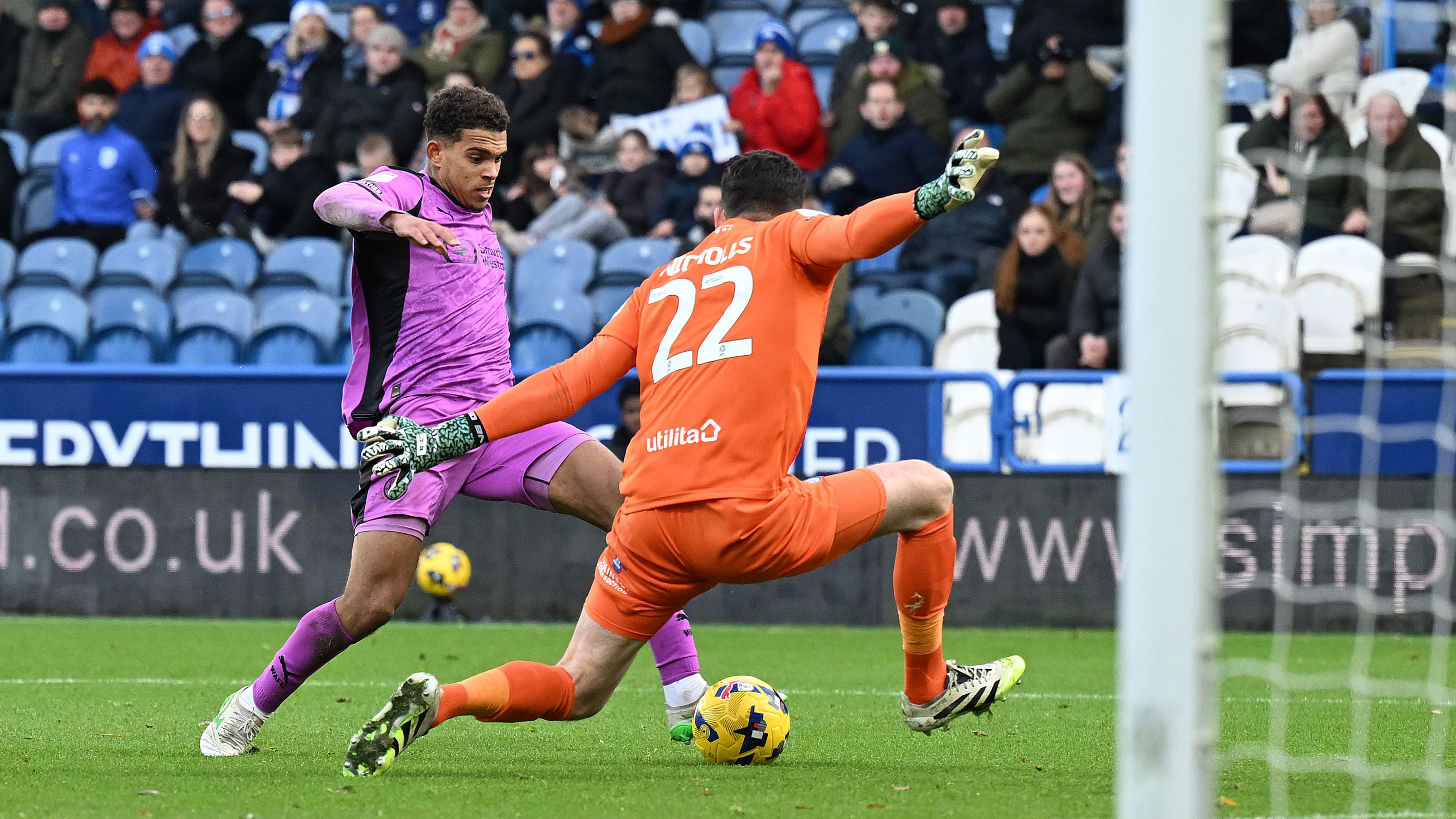
For 30 minutes, Huddersfield Town excelled in murky Nottinghamshire, obliterating Mansfield Town by scoring three times in 15 minutes—and they could quite easily have doubled that tally with a genuinely thrilling display.

Continuing with two strikers, a high and aggressive press, and playing out from the back with menacing purpose, the Terriers followed up an encouraging performance against a very poor Plymouth side with a clear step up in quality against opposition of a far higher standard.

Lee Grant appears to have stumbled upon a team and a formation that works, built on partnerships throughout the side who, finally, appear to be more than the sum of their parts—though the renaissance is still young and faces stern challenges in the near future.

With a league as unpredictable as League One is proving to be this time around, Town’s poor form of just a few weeks ago has caused less damage to their prospects than it perhaps deserved, and a huge opportunity is now opening up for them.

At least three of yesterday’s substitutes would walk into any side in this division, and that depth is likely to expand in the coming weeks. Grant must use it more judiciously than previously, turning it into an advantage rather than confusion.

Of the players who shone through the November gloom at Field Mill, Radulovic, Charles, and Balker were all surplus to requirements until stepping up very recently, but they were key to a thoroughly satisfying afternoon.

The front two combined superbly, with Radulovic performing more intelligently than ever before and rarely erring, while Charles’ undeniable energy translated into one of the most effective striker performances from anyone this season, as his drought now looks firmly behind him.

With the blossoming partnership of Ledson and Harness, a left side considerably improved by Miller teaming up with Roosken, and the hugely impressive Balker slotting in alongside the potential of Feeney, it felt like watching a team rather than sporadically performing individuals.

A few minutes of early home pressure were easily quelled before the Stags were eviscerated in a devastating spell of quite sublime play which few, if any, divisional rivals could have resisted.

Any thoughts the home side had of imposing themselves dissolved in the fifth minute when Balker strolled unchallenged for a third of the pitch, executed a drag-back to foil the first challenge, and fired a ball into Charles, who fed Roosken on the left. The Dutchman held the ball before laying it into the path of Miller, who delivered a perfect back-post cross for Radulovic to head past a despairing Roberts in the Stags’ goal.

Almost immediately after the opener, Harness robbed a home player and fed Ledson who, in turn, found Wiles, who quickly moved the ball on to Charles. He set up Miller for a shot that was comfortably saved, but the visitors were cranking up their dynamism and a second goal was only minutes away.

Harness again won a midfield battle, again playing the ball to Ledson, who yet again found Wiles. This time Radulovic met the next pass before laying the ball into Charles’ path, and he beat the keeper from around the penalty spot.

The carnage wasn’t over for the shell-shocked hosts, as a great curling ball from Radulovic found Sørensen with acres of space to run into. The Dane’s shot took a deflection that deceived Roberts, but the scintillating visitors fully deserved to be three up.

Indeed, had Miller converted at the end of yet another superb move which he himself started with a scything run up the pitch, had Balker kept a header down from an excellent corner, and had Charles stayed onside to tap in a keeper spill, the scoreline would have been extraordinary.

A spectacular speculative effort by Charles is also worthy of recall.

Perhaps unsurprisingly, the 60 minutes that followed such carnage were prosaic in comparison, but it is in that first half-hour where the hopes for Town’s season lie. Exhilarating dynamism thrilled an away support who were not to witness a goal at closer quarters in the second half, but who left entirely satisfied by the promise on display.

It was slightly disappointing to concede a preventable goal midway through the second half, when the otherwise excellent Feeney misjudged a ball and allowed Will Evans to give Mansfield brief hope. It lasted only a few minutes before Goodman picked up an obviously fake injury (the man had one save to make in the whole game) to facilitate a tactical break. This gamesmanship needs stamping out.

Overall, it was a quiet second half. Mansfield, a very decent side at this level, toiled away largely in vain, while a couple of good efforts from Miller and the returning Evans were the closest Town came to removing any vestige of doubt over the result.

An excellent start to an important and challenging week, setting Town right back in the mix—and the growing optimism must now be translated into a good run of results. The ability of this squad to gain momentum was clearly demonstrated in the first 30 minutes of this game; let it be a catalyst for better times.

Town sink poor Pilgrims

Town Sink Poor Pilgrims

Sometimes, adversity becomes the mother of invention, and Town’s familiarly dire list of injuries finally forced Lee Grant to make changes that have seemed glaringly obvious for weeks — particularly playing two men up front. After a mensis horribilis in October, an early winter revival may have begun.

It has helped enormously that the first fixtures of the month have been against deliberately weakened opponents in Mansfield, and a Plymouth side whose performance was an insult to the 1,200 Devonians who travelled a long way to witness it.

At least three of Grant’s starting choices were players with no obvious future at the club just a few short weeks ago: the previously less-than-lethal front two and the permanently fragile Balker, while the squad on duty contained a majority from last season’s miserable campaign.

Town, perhaps carrying some momentum from the relatively straightforward dismissal of Mansfield in the Vertu Cup days previously, began on the front foot and forced some early corners. However, it was the visitors who created the first chance of the game, as the recalled Goodman pushed out a decent effort from 25 yards.

That proved to be the high point of the half for the Pilgrims, as they deteriorated precipitously thereafter — posing no threat while appearing increasingly vulnerable to a Town side that hit their straps around the half-hour mark, penning the visitors into a desperate and creaking rearguard action which finally broke after incessant pressure.

Had Town failed to convert their dominance into a half-time lead, scrutiny might have fallen on Wiles, who had two particularly woeful efforts when in decent positions, while Hazard in the Argyle goal made two excellent saves from headers by Feeney and Radulovic.

Harness, looking far more comfortable and creative centrally, saw a good effort scream over the bar before Wiles — after an incisive ball from Harness — and the commendably combative Charles opened up the visiting defence with simple passing, before the latter unselfishly fed Radulovic for an easy but well-worked opener.

A single-goal lead was the least Town deserved for a dominant performance exploiting Plymouth’s nervous lack of confidence.

Balker and the impressive Feeney formed an immediate understanding at the back; Sørensen’s improved form this season continued, and while the Roosken–Miller partnership on the left rather flattered to deceive, the new twin-striker force persistently hassled the visitors into errors and effectively planted doubts.

It was a little concerning that the second half began with Town appearing more conservative than necessary against meagre opponents, but that period quickly passed as the hosts slowly got back into their stride.

A decent opening was created for the much-improved Ledson, but the captain’s effort was skied high before a clever interchange involving Wiles and Charles fell to Miller, whose shot was blocked.

Ashia replaced Miller — who is yet to return to his pre-injury form — and caused multiple problems for the Devon side down the left, including winning the corner from which a flick-on by Radulovic worked its way to Charles, who bagged a thoroughly deserved goal to add to his midweek brace.

The striker’s hushing of the crowd after months of mediocrity was ill-judged, but there is at least the possibility that his Huddersfield career could turn around from this point — though the quality of opposition in the games where he has finally translated work rate into tangible achievement rather urges caution.

Plymouth may have reason to be aggrieved at card-happy referee Stockbridge for Town’s third. Having given them a very soft free kick for a Harness challenge, a more obvious foul on the free kick’s recipient was let go, allowing Charles to feed Ashia — whose now-trademark right-foot curler inevitably found the back of the net with Argyle’s keeper rooted.

Raw as he is — and given that passing to him with his back to goal is generally a fruitless exercise — give him some green space to run into and he can cause havoc. In his short time on the pitch, he had three shots: one which led to the corner for the second, and one which buried the opponent at 3–0.

A late consolation by Tolaj was disappointing but of little consequence.

With another enforced break next weekend, Town have the chance to return a couple of others to fitness (Castledine’s surprise appearance on the bench after a very quick recovery is perhaps the only positive injury news in at least two seasons) and build on this week’s confidence-building wins.

Grant should reflect on the good fortune of having the right decisions rather forced upon him — and against vulnerable opponents — but he shouldn’t be begrudged the opportunity to build on these victories and create the kind of momentum that could rip through this mediocre league.

Grant exposed

Grant Exposed

Huddersfield Town’s annual collapse has come a lot earlier than usual this season, with the (admittedly limited) initial promise extinguished before the clocks go back.

Another Kevin Nagle/Jake Edwards managerial appointment is disintegrating before our eyes, as Lee Grant’s inexperience and curious devotion to robotic management-speak are cruelly exposed in a spiral that has been staggeringly rapid.

There doesn’t appear to be any way back for the young boss, with a fanbase thoroughly sick of disastrous decisions that have taken us from a Championship play-off final to mid-table in League One — with a trajectory that currently promises worse, despite a squad that should achieve a top-six place as a minimum.

Arresting a slide in football is not an easy task, as Huddersfield Town’s history tells us, with stabilisation the most difficult to achieve. Nagle and Edwards have overseen some appalling decisions, none of which have even vaguely contributed to a reversal of fortunes; quite the opposite.

Sacking Duff for overseeing an injury-ravaged blip in form and abandoning any hope of reaching the play-offs should go down in the annals of monstrously bad HTFC decisions — but this shouldn’t dissuade them from terminating Grant, though it likely will in their contrarian way.

Facing a side with a terrible away record — including a recent 3–0 defeat at Burton, of all places — going one up during an unusually positive first 15 minutes, and comfortably, if tediously, holding the visitors at bay until injury time, Grant managed to oversee a quite incredible but increasingly predictable defeat.

Bolton, vulnerable in a first half that deteriorated in quality as it went on, were let off the hook by an inept Town attack featuring a ponderous Taylor and the criminally wasted, out-of-position May — posing little and diminishing threat.

Over-cautious and lacking bravery or thrust, Town relied on the occasional foray forward by Roosken. Sadly, his industry — including containing Bolton’s best player — eventually exhausted him, and his removal from the pitch proved portentous.

In that first 15 minutes, Town attacked with good intent, forcing corners and putting the visitors on the back foot.

A goal-bound May effort slammed into Taylor, who couldn’t get out of the way, and the striker had another effort blocked before a good corner delivery by Roosken cleared the first defender for once and was headed home very well by Castledine.

That early lead seemed to weigh on the shoulders of both management and team, as they got progressively worse as the half went on and never looked like adding to their score to dishearten a vulnerable opponent.

Nicholls was called upon to make a hugely important save late in the half when Cozier-Duberry finally got the better of Roosken and played in Forrs, who shot too close to the keeper.

It was a sign that Bolton had a lot more to them than they had shown up to the break, while Town’s withdrawal into themselves with the comfort of a lead became ever more evident.

The second half was a tactical disaster on all sorts of levels from Town’s beleaguered young manager, as his team gradually but perceptibly faded in the face of a side growing in confidence and sensing blood.

Despite a good performance, on the whole, from the back four, the Ledson–Kasumu axis failed yet again in a malfunctioning midfield largely starved of the ball by their increasingly tenacious opponents.

Pushed deeper and deeper, Town’s coherence was already creaking when Grant made the quite ludicrous decision to replace Taylor with Dion Charles, who just a short time ago was assumed to have no future at the club.

Miller also made a welcome return but could add nothing to the team other than join in the attempt to suppress Bolton’s star turn — an effort completely upended when the exhausted Roosken had to leave the field and was replaced by Roughen, who couldn’t cope with the threat.

Nicholls went down with a mystery injury on 75 minutes to allow for a break and managerial instructions, which was probably not the brightest of moves. Bolton’s players and staff couldn’t have helped noticing that three or four Town players were trying to stretch out aching limbs, sending further encouragement to the by-now entirely dominant Trotters.

While the equaliser was very, very late, it was no surprise at all. Cozier-Duberry was by now menacing Town’s new left side and delivered a great cross to the back post, which was guided in by Daley past a helpless Nicholls.

It was the least the visitors deserved, despite how late it came for them. They had a reasonable penalty appeal turned down when Nicholls seemed to collide with McAtee, having been played in by Conway, who had sliced through several failed challenges to set up the opportunity — and they dominated the ball against tiring Town legs.

A disappointed and increasingly disgruntled crowd had just digested the loss of two points when the other one was seized in front of their disbelieving eyes.

As a Town attack broke down, Bolton broke into prairie-level open spaces, culminating in Burstow releasing Cozier-Duberry to fire past Nicholls, who got an upper arm to the effort but couldn’t deflect the ball enough.

Bolton’s adventure and bravery — epitomised when they grabbed the ball out of the net to go again after the equaliser — delivered a crushing blow to Grant, his knackered team, and a half-empty ground still waiting for the front-foot style promised by Nagle’s flippant “Northern football” nonsense, bizarrely latched upon by Town’s communications people.

Patience is now exhausted, and while it is doubtful that Nagle and Edwards will take timely action given their past performances, it is time to admit their huge error in giving a novice manager not only the job but also extensive power and influence.

There seems no end to Town’s travails — despite, and probably because of, the constant changes they have made. While it seems counterintuitive to make yet more changes, they surely must.

Same old song

Same Old Song

Concern has turned to worry at the Accu Stadium as the 25/26 season begins to mirror last season’s unacceptable disaster.

A promising start is dissolving, with goals drying up, injuries mounting, and the proportion of last year’s losers starting games becoming alarmingly high.

What felt like a different era — with a bright, if raw, manager and new players finally replacing the despised squads of the past couple of seasons — is in danger of turning very sour on impact with the better sides of this division. And Burton.

Completely outplayed by a well-drilled, committed and relentless Stockport side — who were arguably even better with ten men — Town’s dismal display elicited well-deserved and worrying opprobrium from a gaslit crowd waiting for the millions spent to translate into a team remotely resembling title challengers.

Other than Feeney and Nicholls, who did their jobs efficiently and to the best of their ability, the same team that had claimed three points in Devon last week simply didn’t function as a unit. Grant, increasingly looking out of his depth, refused to make obvious changes to personnel or tactics until it was far too late.

He isn’t helped by the thinning of his squad through injury over the past few weeks, but it’s hard not to think that a more experienced manager would cope much better — with his in-game management looking passive at best and petrified at worst.

In theory, playing three creative players behind May or Taylor with two holding midfielders should provide a solid platform to control games, but from the first minutes nothing was going right for Castledine, who looks entirely stifled out wide. Harness blows far too hot and cold, and Wiles’s sporadic prompting has been a feature for far too long.

Ledson’s form is far too poor to be ignored, while Kasumu’s energy was largely wasted by a chronic lack of movement around and in front of him.

All the while, the visitors’ superior organisation, team coherence and all-round nous reduced Town to a panicked, fumbling mess in a dreadful first-half performance.

Several good opportunities were spurned by the Hatters, with Nicholls called upon to make a couple of largely routine saves and Feeney making a last-ditch recovering tackle to deny Andressen.

In slick conditions, County were winning each individual battle and restricted Town to a Wiles effort following a rare half-decent move — which was chest-blocked — and a Harness drive from an acute angle which nearly knocked over the visiting keeper with its ferocity but lacked accuracy.

Town’s typically subdued first-half performance — now a feature — appeared to be heading towards a stalemate until a soft free kick was given against Feeney, which Norwood floated, not particularly dangerously, into the area. Stupidly, the strangely out-of-sorts Low tugged on an opposition shirt to concede an obvious penalty.

Norwood, a regular tormentor since his departure so many years ago, expertly despatched the spot-kick and Town deservedly went in behind, unable on this occasion to escape punishment for another weak first half.

Improvement in the second half seemed inevitable, rising from a very low base again, and Town were handed what to others would be a lifeline — but for the Terriers is always a dead weight — when Onyango was dismissed for accumulating two yellow cards in the space of a few minutes.

Incredibly, Stockport continued to look far more dangerous than their disjointed, seemingly bewildered hosts and had good chances thwarted by an excellent block from Nicholls and a desperate saving tackle by Kasumu before finally — and deservedly — doubling their lead when Bailey curled an excellent finish into the top corner.

Baffling substitutions followed, with Sorensen, who had been largely competent, being replaced like-for-like by Gooch, and Radulovic, rather than Taylor, seeing the end of the afternoon for the wretched Castledine — who looks entirely miserable out wide — shortly after the Chelsea loanee spurned a straightforward chance from close range which could have changed the dynamics of the game.

By the time Radulovic reduced the arrears late on with a decent header from a Gooch corner, Town’s scramble for a face-saving point picked up for the final moments. But the latter stages were most notable for Alfie May’s remonstrations first with Low after Stockport’s second goal, and then with Grant after Radulovic’s — with a vociferous suggestion that a defender be added up front for height.

Town’s previous failure at Blackpool against ten men was notable for Grant’s apparent lack of innovation away from the coaching manual — sticking a big fellow up front. May apparently remembered that omission; Grant did not.

The arguments were presumably born of May’s frustration at sometimes having to come back 50 yards for a touch of the ball, and the inability of the manager and his teammates to create even a single chance for one of the lower leagues’ most lethal marksmen.

Calls for Grant to be sacked, while premature and oblivious to the deep-rooted problems and instability caused by knee-jerk decisions — including the massive error made in dismissing his predecessor — are still another concern at a club which should be stamping its mark on this division with the investment made.

Educated, articulate and qualified up to his eyebrows, Grant is the football hipster’s dream — but his inability to waver from the manual is becoming worryingly restrictive.

It’s true that he can point to a growing injury list, but that only deprives him of a depth most clubs in League One would view as luxurious.

A thoroughly depressing day — watching a very well-run club, with a manager of significant longevity, easily brush aside our misfiring team — felt like a turning point.

It’s now up to Grant, his staff and the squad to revitalise during the enforced break ahead of them and get back on track.

We thought this season was different. It’s increasingly the very same.

Dominance rewarded

Dominance Rewarded

Though unnecessarily fraught at the end of a game which could have been resolved several times over, Town’s much-improved energy and intent deservedly delivered three points away from home for the first time since Reading.

Sprinkled with several very good performances, the victory was built on an aggression largely absent from the drab home draw with Burton, with the spurning of multiple chances being the only real negative of a fruitful trip to Devon.

Despite a good effort by Castledine which curled past the far post in a precursor of what was to come, Town started sloppily in the first 15 minutes, and it was the hosts who should have opened the scoring when the visitors lost possession. A good ball into Magennis was expertly brought down by the striker to create a chance he rather inexpertly put wide.

The let-off seemed to inspire the Terriers, who proceeded to dominate the game with a first-half display which could have resulted in a healthy lead. But not only did they go to the break with just a single-goal advantage, they suffered a scare at the end of the half when an Exeter equaliser was harshly ruled offside.

As it was, the advantage was secured by a fine Castledine strike which, unlike his earlier effort, found the target off the post with the rather diminutive home keeper well beaten.

Exeter couldn’t say they hadn’t been warned, though Roosken’s dummy run created a slight hesitancy which gave Castledine an extra moment to evade any block of his excellent effort, which satisfyingly clipped the post on its way in.

The goal had been coming, with Town imposing themselves on their lowly opponents after the early scare. With Kasumu and Harness prominent, Sorensen an increasing threat down the right, and the movement and hard work of May and Wiles creating spaces, superiority was established.

Harness fired over with an instinctive shot following good work by Sorensen, who himself came close after stripping a couple of defenders before menacingly attacking the area. His technique was slightly awry, and his shot curled away from rather than into the goal.

Wiles was also guilty of a poor miss, dragging his shot wide when played in, while—perhaps most surprising of all—May crashed a very presentable chance over the bar following another excellent move.

The late scare before half-time was a timely reminder that the lead was fragile. While Exeter had rarely been in the game since their own early miss, the home side was always going to create a chance or two.

Shortly after half-time, Nicholls was called upon to make a very good save from a rasping drive following a neat move by the Grecians. Town were going to have to earn their points.

What followed was encouraging and frustrating in equal parts.

More chances came and went, with the most egregious being Wiles’ failure to head home from a few yards out with only the keeper to beat.

Sorensen, who has grown into the season rather promisingly despite still displaying some defensive frailties, had attempts blocked, the unfortunate May saw a shot deflected on to the bar, and substitute Taylor should have done much better than shooting wide when played in by May.

All the while, the growing fear that the profligacy would bite the Terriers’ collective posterior gnawed at the away supporters, who had a close-up view of the hosts’ late rally. It ultimately came to nothing but was concerning nonetheless.

The modest four minutes of injury time were largely played in Town’s half, and a couple of corners threatened their lead but were relatively easily negotiated, and a very welcome away win was secured.

Setting a growing injury list to one side—and there were one or two niggles in this game which may cause concern, including one for the quietly impressive Ledson—there was much to be enthused about in the performance, even if slightly dulled by the poor conversion rate.

At the back, Feeney was imperious and barely put a foot wrong, while the masked Roosken looked far more comfortable at left-back and got forward well at times.

Ledson and Kasumu formed an aggressive and effective partnership in midfield, allowing the attacking players the platform to play, once the hesitancy and poor passing of the first 15 minutes subsided.

Nicholls’ save, his distribution, and overall control of his area vindicated Grant’s decision to keep him in place, as he begins to resemble the keeper we knew a few seasons ago.

Exeter look a little doomed, and defeating the community-owned club with our budget should be placed in context, but this was the best league performance for some time and keeps the team well in touch as another set of more challenging games approach.

The big yawn

The Big Yawn

Relentless, metronomic, and efficient, Manchester City brushed aside a committed but hopelessly outclassed Huddersfield Town in a yawn-inducing encounter that ended the Terriers’ unusually long League Cup involvement for another year.

City’s domination of the ball, particularly in a disappointingly bland first half, made for a largely bloodless, sterile contest. It might have been improved had someone in blue and white crunched into a smug counterpart to lift the spirits of a home crowd dulled by the inevitable.

Connoisseurs of the modern game were no doubt purring at the sight of hugely talented elite players passing their inferior opponents into submission, while those of us of a certain age bemoaned the absence of an underdog’s relish for a scalp.

It may have helped Town’s cause to have selected someone up front other than fifth-choice striker Charles, who ran around without influencing the game even as a nuisance and posed not the slightest threat. But Exeter awaits.

The passivity of the Terriers quietened a crowd swelled by Premier League enthusiasts, and this was not helped by the necessary sacrifice of the South Stand to a noisy away support. The absence of hostility, on and off the pitch, gave the first half the air of an exhibition match as City strolled through with stark superiority.

For all their possession and quality, however, the visitors lacked penetration for much of the first period. They eventually took the lead through a strike by Foden worthy of any stage, arrowing a left-footed shot from outside the area beyond a helpless Nicholls after a neat one-two.

Town’s only attack of note before the break saw Wiles break into the box to take a Redmond ball in his stride, only to fire it a little too enthusiastically across the area. Sorensen, the nearest to making contact, was beaten by the pace.

Deservedly ahead at the break having barely broken sweat, City had established the gulf in class, and with their opponent suitably cowed, their tranquil path to the next round looked inevitable.

That journey was never truly threatened in a slightly more entertaining second half, though Town put up a little more of a fight despite being relentlessly pinned into their own half for long stretches.

Nicholls, solid throughout, made one excellent save to deny O’Reilly’s attempted chip when clean through, and was well positioned to make three or four other routine stops.

He was entirely helpless, however, to prevent a rasping drive from Savinho around the three-quarter mark. Having thwarted City for the first half-hour of the second period with a mix of accomplished and desperate defending, it was disappointing to leave the Brazilian international with so much space near goal—but the strike was devastatingly good.

If the tie had ever been in doubt, it was now over. Still, Town at least showed more ambition. Before the second goal sealed their fate, a good free-kick delivery saw Murray head wide when unmarked, while Redmond shot over from a good position after another set-piece header had been won in the box.

Cameron Ashia came on as a late substitute and immediately changed the dynamic down the left with a couple of promising carries, before curling an excellent effort against the post—the hosts’ highlight of a largely disappointing night.

Loaded with high-quality internationals—and Kalvin Phillips—City completed their task against opponents who never truly decided how to compete and, in the end, paid heavily for over-caution, though it could be argued that a bolder approach would only have brought an even heavier price.

Defensively, there was much to admire about the resilience, concentration, and discipline required to restrict such a quality-laden City. Feeney, in particular, stood out, while Nicholls surely tightened his grip on the keeper’s jersey.

As a spectacle, the game lacked the thrills usually hoped for in a David v Goliath contest. There was no chance for the underdog to unsettle petrostate-funded talent, and Grant’s team selection rather betrayed that his eyes were on Devon rather than on making it to the next round with another higher-league scalp.

A win on Saturday would more than compensate.

Brewing up a stinker

Brewing up a stinker

Even a convincing win against lowly Burton Albion wouldn’t have absolved Town from the ignominy of defeat at Valley Parade seven days earlier.

That derby capitulation crystallised the suspicion that Town is a collection of individual talent significantly underperforming under a rookie manager, whose commitment to the coaching manual is looking increasingly dogmatic.

After a lethargic first hour, with far too little invention, the hosts were grateful for two sharp saves by Nicholls, an excellent block by Ledson, and a headed miss by Beesley as the Brewers defied their underdog status with a first-half performance that deserved more reward.

Other than Kasumu, who provided virtually all of Town’s energy, too many in blue and white underperformed. Their stodgy, mechanical approach rarely looked like producing a breakthrough, with the promising Alves barely allowed any space or freedom by the solid visitors, while Castledine, now getting starts, had too little influence.

Up front, Taylor was isolated, and while May gets through a prodigious amount of work, surely it is time for him to be played as the out-and-out striker he is.

It would have been interesting to see how Town might have responded had Burton taken the lead they deserved. Maybe it would have woken them from their torpor, but a hugely disappointing first half was a soggy mess as the expensively assembled squad, for the second Saturday running, struggled to match the tenacity and controlled aggression of an actual team.

Underachievement in the first 45 minutes is now a feature of the season, not a bug, and it was to be expected that Town would improve after the break—and this they eventually did. To an extent.

Taylor latched onto an excellent long ball from Feeney just before the hour but rushed his shot, wasting a very good opportunity. It was, however, the beginning of home dominance which, in normal circumstances, would have brought victory, but Burton’s resilience proved exemplary to the end.

It is to damn with faint praise to report that the Terriers finally removed their heads from their fundaments and sufficiently raised their performance to offer some threat against a side who will, hopefully successfully, be fighting relegation this season, just as they did last.

Following Taylor’s botched opportunity, he hit a weak shot after a promising break with two men to his left isolating one defender. A poor decision, possibly born of frustration at his earlier miss, but hardly helpful to the cause.

Castledine then missed the next opportunity after good work by Kasumu and May, and an intelligent leave by Taylor left him open on the right. Though a little wide, and with two defenders converging upon him, the Chelsea loanee needed to shoot across the goal from whence the ball came but sliced well wide.

By now, Town’s pressure was as intense as the persistent rain and, admirably, Burton were straining every sinew to shut out their hosts. At last, the game had delivered some entertainment.

Completely spent as an attacking force, the visitors somehow managed to keep the ball out of the net in a frantic finale.

First, Roughan hit a perfect shot from just outside the area which was somehow blocked on the line. Low should have scored from two yards out with a header from a corner, but an instinctive save by Collins kept the game scoreless, before another excellent Roughan effort went narrowly wide.

The final piece of brilliance by the Burton defence saw Hartridge clear an excellent Radulovic header off the line, and the game ended goalless.

Though the litany of chances in the last half-hour appears to point to the bad fortune that can happen during a campaign, it in fact just emphasises the current malaise of Grant and his squad.

Unable or unwilling to settle on a first eleven, the slow starts which afflict the Terriers may be the result of lacking cohesion through constant swapping and changing.

Developing partnerships across the pitch seems to be a slow process, and there is little evidence they are even close to being achieved. Perhaps patience is required as new players like Alves, Redmond, Castledine (to an extent) and, still to come, McGuane settle in.

An inexperienced manager overseeing a virtually brand-new squad isn’t going to be without issues, but the dirge served up in the first hour against the Brewers cannot be excused, and the assumed easy points were deservedly dropped.

Tangled up in ecru

Tangled up in ecru

For the second successive away trip in the league, Town self-immolated in bizarre fashion, handing their hosts a deserved, but not particularly hard-earned, victory.

The majority of the blame, rightly, will rest with loanee keeper Goodman, who never recovered from a shaky start to proceedings which, ironically, began with a fine double save (though the follow-up he prevented would have been ruled offside), but soon descended into Tim Clark-levels of clownishness.

Underlying the frailty between the sticks, however, was a curious approach to a Yorkshire derby: intricate, terror-inducing play across the back that always looked liable to collapse.

Meticulous planning, theoretical strategies and drilled coaching can easily crumble in the intensity of a derby, and the over-playing merely acted as a trigger for a relentless and effective Barnsley press, who clearly understood that you have to earn the right to be fancy-Dan.

The huge and loud away support watched on with an anxiety which must have been felt by players whose confidence in the tactics looked, if not shaky, then at least on edge. Mistakes crept in early, with a Roughan slip leading to danger and several attempts to get up the pitch strangled at birth in the middle of the park.

Barnsley dominated the crucial early stages and were gifted an opener when Goodman spilled a routine cross to Keillor-Dunn’s feet before ten minutes were up.

The error clearly preyed on the young keeper’s mind and he looked decidedly uncomfortable from that point, including nearly carrying the ball out of his area when he came out to meet a long through ball. Only a linesman’s generous interpretation prevented further trouble for Goodman.

Sadly, the warning wasn’t heeded and his next impetuous gallivant to deal with a situation in which he should have had no part completely derailed his team.

A ball down the line lifted over Feeney, who was covering for an advanced Gooch, towards McGoldrick was mildly threatening but heading towards the corner rather than directly on goal. Goodman took it upon himself to summon his inner Harald Schumacher and assault Barnsley’s veteran striker.

A red card was inevitable and, just as Town are incapable of taking advantage of playing against ten men, examples of heroics when similarly denuded are very rare.

The omens surrounding Town’s trip to Oakwell, a destination of decidedly mixed fortunes, had not been helped by the club deciding to cock a snook at the football gods by debuting the second iteration of an ecru kit.

The first, as supporters of a certain vintage will recall, was donned by a Peter Jackson XI who were 6-0 down on a bleak Friday night at half-time, eventually conceding seven. Thankfully, the yellow-and-black checkerboard kit won’t be brought back for the visit of Manchester City.

Before the sending-off, Town had settled down to an extent and Wiles should have levelled when one-on-one with the keeper, having been found by Harness with an excellent ball. Lacking composure, his effort was reasonably easily saved.

More frustratingly, however, Town regularly found Roosken in space on the left only for the Dutchman to waste several very promising attacks. A reassessment of his efficacy as a winger is now long overdue — a fit Miller, or a new recruit, would have exploited those opportunities far more clinically.

This is not to suggest, in any way, that Town were ever on top. Barnsley’s rearguard solidly dealt with any attacking ambition of their rivals.

Nicholls replaced the wretched Goodman and could now reclaim his number-one position in his rival’s enforced absence, but he could do nothing to prevent Barnsley doubling their lead just before the break, effectively settling the contest.

If there was a hefty slice of good fortune in a strike from the edge of the area heavily deflecting off Roughan following a corner-clearing header, leaving Connell unmarked and then failing to get out quickly enough to him contributed to Town’s undoing.

A disastrous first half, then, and one which had only been seconds old when May went down with an injury which looked serious and took some time to resolve. He played on but was replaced at half-time by Taylor, hopefully as a precaution.

A dour and forgettable second half saw Town put in a decent effort with depleted numbers but they rarely looked like scoring to put some doubt in the minds of their hosts.

The efforts were acknowledged by a loud away end who did their best to raise the ten men, but Barnsley quelled the attempts with some comfort. They were helped, however, by a sub-par second-half performance from the referee, who missed several home infringements, including a clear pull-back on Taylor and a bizarre interpretation of a foul on Sorensen where he punished the Dane.

His ineptitude was not the reason for Town’s demise, as the damage had already been done, but it was a little cruel for them to fall further behind late on when Nicholls parried a shot to the feet of the blessed Keillor-Dunn, who bagged surely the easiest brace of his career.

A late Taylor consolation, latching on to a loose back-pass, gave the defeat a more respectable hue but couldn’t erase the pain of a day that needs to be resigned to history very quickly.

Grant will no doubt take stock, learn lessons and reassert his faith in “the group”, as he should, but sometimes the basics can be lost amidst the theories — and earning the right to play, which may be a cliché but is true for a reason, should be the first thing drilled home.

The supporters have clearly not lost faith in the promise of this season given the noise they made unwaveringly, but there cannot be a repeat of this in the next Yorkshire derby in two weeks’ time.

Town topple table-toppers

Town topple table-toppers

A second hard-earned win in the space of a few days, against in-form opposition, thanks to the predatory instincts of Alfie May, lifted Town above all except Cardiff in the table as the promising start to the season continued.

Stevenage posed a very different challenge to the lively and expansive Doncaster in midweek, offering a physical and resolute performance which rarely threatened but could easily have frustrated a home side still in the process of establishing patterns and rhythms.

Anticipating the visitors’ likely aerial approach looking to extend their 100% start to the campaign, Grant fielded three centre-halves in his back four, with Wallace—somewhat surprisingly—keeping his place on the left after a less than convincing midweek display, even if his selection made sense tactically.

Town began brightly, Kane firing over with a decent effort and May forcing a good save, but the half soon descended into an attritional contest in search of inspiration. Neither Roosken nor Harness could unlock a solid visiting defence, while Stevenage offered little attacking threat themselves.

Fans were, however, treated to the first application of the new law restricting goalkeeper possession to eight seconds in open play, as Marschall in the visitors’ goal conceded a corner for delaying his kick a fraction too long.

It seemed a little harsh—particularly when Goodman later flirted with the limit without sanction—but the novelty at least added some interest to an increasingly dour game.

Town promptly wasted the corner.

Despite the lack of thrills, yet another half had passed without a goal conceded, and those 12 manic minutes at Blackpool are beginning to look increasingly like an outlier.

A brighter start to the second half saw a move begun by Sorensen, who has started the season well, end with a May shot on the turn that was routinely saved.

Perhaps sensing that Stevenage’s reputation for long-ball dominance was overstated, Grant made an early and positive switch, replacing Wallace with the more adventurous Roughan, before Ashia and Taylor came on for the ineffective Roosken and—more surprisingly—Harness.

The changes injected dynamism, and a short spell of intensity finally broke down the previously obdurate defence.

Wiles and Kane, both very good throughout, worked their opponents around before Kane exchanged passes with Roughan, releasing the Irishman into the area.

Roughan cut the ball back; Taylor either swung and missed or cleverly dummied—injuring himself in the process—allowing May to pounce. The striker sat one defender down with a feint before seeing his first shot blocked on the line, only to bury the rebound.

It was an instinctive first open-play goal of the season for the prolific May and, hopefully, a portent of another fruitful year.

Taylor, hampered by the knock picked up in the buildup, managed a reasonable strike that was comfortably saved, but Town inevitably spent much of the closing stages on the back foot, testing the nerves of the home crowd.

Stevenage’s ascendancy amounted to little, with the excellent Low – well assisted by Feeney—marshalling a defence that rarely looked troubled.

Kane cynically brought down Kemp just outside the box to prevent a rare moment of danger, rightly earning a yellow card from the quietly impressive referee. From the free-kick, substitute Patterson curled well over.

Goodman made one smart save from a deflected shot near the end, and the subsequent corner saw Stevenage keeper Marschall join the attack to sow late confusion, but Town held firm to register a satisfying if unspectacular win over a tough but quite limited on the day, opponent.

May’s predatory strike will be the most remembered moment of an otherwise largely forgettable encounter, but the flawless Low was again outstanding at the back, while Sorensen, Wiles, and Kane— rightly maligned in last season’s disgraced campaign—were the pick of the rest.

We have, of course, been here before with a strong start, but the performances so far have been more convincing than last year’s false dawn. The squad looks significantly deeper, and there remains plenty of room for improvement.

What this latest victory lacked in entertainment and style, it more than made up for in defensive solidity, comfortably quelling a potentially dangerous opponent as Grant continues to find ways to win.

An intriguing Yorkshire derby with an improved Barnsley awaits next week, but first comes a trip to Sunderland—a stern test of Town’s resources as they look to complete a very successful August.

Donny kebabed

Donny kebabed

For at least 70 minutes of a keenly contested game, Doncaster Rovers displayed all the characteristics of a team in fine form: momentum, sharpness, and a desire to compete in this division after promotion.

In the first half hour in particular, Rovers ran Town ragged with a highly effective press, forcing error after error as the hosts failed to find any rhythm. They were hugely fortunate not to concede on several occasions.

Outplayed in all areas of the pitch, Town had to strain to stay in a game that seemed to be constantly slipping away as Rovers’ crisp and incisive passing created threat after threat.

Defensively fragile, the Terriers were at least resilient. Feeney made an excellent block, the otherwise shaky Goodman produced saves of varying difficulty, and, most notably, Castledine made a fantastic recovering tackle on Sbarra, who was clean through on goal following a counter-attack from a Town corner.

With Murray all at sea at left-back, the midfield barely functioning, and an isolated May posing no threat, it was a torrid opening 30 minutes. The spell was only interrupted by a strategic “injury” to Goodman, allowing Lee Grant time to make adjustments to a game plan which emphasised the lack of developed partnerships in a squad still working each other out.

That break — cynical, and something that really ought to be outlawed — seemed to partially do the trick. Town began to more effectively quell their superior opponents, and the game became more even. The home side finally created a reasonable chance when a long ball to Harness saw the ex-Ipswich man turn a hopeful punt into a good shot, which was well saved.

The calmer final 15 minutes couldn’t erase the very poor start, but Town went into the break with the consolation that they hadn’t conceded. While they had plenty of room for improvement, their visitors may already have peaked.

As it turned out, the winds of change came slowly and almost imperceptibly for much of the second half. Rovers weren’t quite the force they had been, and Town reduced their error count and began to edge towards some coherence.

It was far from perfect — and barely counts as redemptive — but Billy Sharp could still have made it a miserable evening. His customary threat against Town saw him spin cleverly in the box, only for his shot to be blocked by the well-positioned Low.

At nearly 40, the hugely experienced striker continues to ply his trade admirably in an attractive and successful side. Less admirably, his tendency towards over-aggression earned him a booking for a cheap, late challenge on Low.

Pleasingly for Grant, the game turned on his substitutions. Sorensen, Wiles, and Taylor replaced the less-than-convincing Murray (who found Molyneux a handful), the otherwise heroic Castledine, and the far-too-isolated May.

Ten minutes later, Roosken fed Harkness, whose cleverly disguised and perfectly weighted pass found Wiles’s run into the box. The substitute finished smartly to give Town an undeserved but welcome lead.

Fellow substitute Taylor, full of running, latched onto a long ball down the channel minutes later and ran at the visitors’ defence with intent. Inexplicably, O’Riordan grabbed the Town striker’s shirt. While it looked fairly innocuous, it was an easy penalty for the referee to give.

Taylor stepped up and buried his third spot-kick of the season. After so many years of rarely getting home penalties, to earn one in each of the home games so far is quite remarkable. Attacking the box brings rewards, it seems.

A hugely flattering scoreline does, however, need context.

Doncaster hadn’t been beaten since March. The familiarity of their side, coupled with their established, eye-catching style, spoke of a unit with momentum and a winning mentality. Town had to dig very deep to hang in, and while it was visibly uncomfortable, they stuck to the task.

Goalkeeper Goodman had an evening he may wish to forget. Though he made one or two decent saves, his distribution was generally poor and included presenting the opposition with a good chance they might have capitalised upon.

He wasn’t alone in being below par, and Grant acknowledges it will take time for this talented squad to truly gel. Three wins — including this one against a very good side — while that development continues is encouraging, even if the last two performances haven’t been great.

There was much to admire about Doncaster. Emulating their winning mentality and highly motivated teamwork would serve Town well this season. It may take time, but with the quality of players at the coaching staff’s disposal, it is surely achievable.

Another tough challenge awaits next, against yet another side with momentum and belief.