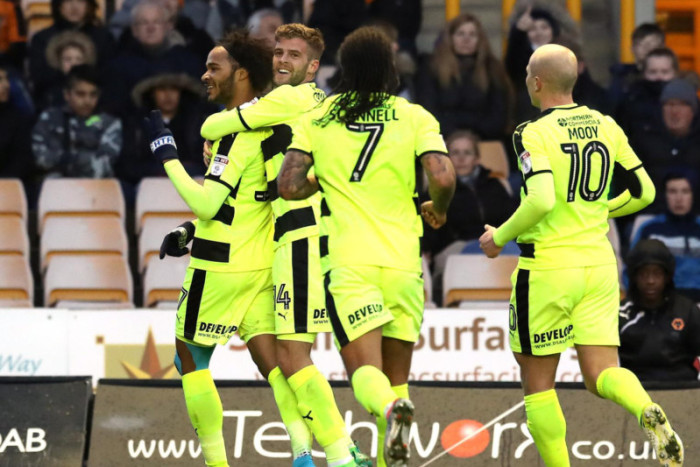
Town shatter Glaziers


IMG_0002

Pundit defying Huddersfield Town opened their first Premier League season with a performance of aggression, tenacity and spirit to record an excellent, if not entirely flawless, win over a largely incoherent Crystal Palace, roared on by an insanely excited following who couldn’t have wished for a better day.

The symmetry of playing at Selhurst Park 45 years on from their last top flight appearance had been well noted in the frantic lead up to the big day. Understandably, given that it’s relevance was only apparent after the event, the fact that Town’s last 3 goal haul amongst the elite was at the same venue in March 1971 was overlooked.

Betraying no sign of nerves, Town always looked far better prepared than their individually talented but collectively confused hosts – an echo of last season’s early games – and should have been in front after just 2 minutes when a sweeping move down the right was worked in to the box but Tom Ince’s effort was easily saved.

Hunting in packs, as they did for the entire duration, Town gave away too many free kicks in the opening period. Some of the decisions by Moss were a little soft, but produced unnecessary pressure and, inevitably, a booking for Smith on the half hour which would have repercussions later in the game.

By the time Town’s aggressive challenges had finally exasperated the referee, however, they were two goals up and largely in control.

With Billing and Mooy controlling the middle of the park in possession and the defence handling Palace’s not inconsiderable attacking threats with calm authority, Town began to assert themselves on their hosts.

Palmer and Billing had unthreatening attempts easily saved by the otherwise vulnerable Hennessey, but space was being found – particularly on the left where the Palace wingback Ward was being increasingly isolated. Ineffective going forward – despite having the potent threat of Benteke to aim at, his crossing was woeful – and defensively suspect, the Eagles’ stalwart appears unsuited to the role De Boer’s system has imposed, and he was remorselessly targeted as the weak point.

The breakthrough came with a well worked corner routine. Mooy, looking every inch a top flight player, hit the near post and Schindler met it perfectly to flick on and induce panic. With Kachunga’s lunge eluding contact, Zanka was on hand to connect – despite tongue in cheek claims of scoring after the game, the Dane’s intervention ricocheted in off the hapless Ward.

Minutes later, Billing, Löwe and Mooy combined to free the Australian down the left and his inch perfect cross was met by the hugely impressive Mounié who planted a perfect centre forward header past Hennessey.

The stunned home side rallied after the goals, knowing that a response their attacking talent could well create would bring them back in to the game and Zaha very nearly provided it. A rare Löwe error – stumbling while trying to intercept a Benteke flick on – let in the pacy winger and only a deflection off the foot of the alert Lössl who narrowed the gap effectively, prevented a timely and potentially game changing goal for the home side. To add insult to injury, a goal kick was awarded.

Despite carrying latent menace, this was the only real clear opportunity for Palace as Town defended stoutly and vigorously. The Schindler/ Zanka partnership held firm, aided and abetted by energetic covering of the team mates in front and at the side of them.

Mounié provided a massive contribution with his defending at corners; heading out several and volleying away another, while Lössl commanded his box authoritatively.

At the other end, Town’s corners were often dangerous and Zanka could have trebled the lead on the half hour but his header from Moody’s cross drifted just wide (though there were probably enough defenders on the line to clear had it been on target).

The final few minutes of the half dragged a little as Town came under some pressure with Benteke heading wide, Zaha drawing a routine save and Puncheon firing well over the bar after a half cleared corner, but as proceedings drew to a close the visitors stood strong and maintained their advantage.

Townsend, surprisingly on the bench, was introduced by De Boer after the break, emphasising the offensive talent at his disposal, but Town started the half strongly and a Löwe drive nearly caught Hennessey napping and Mounié was unable to capitalise on the rebound as his first touch drove him too wide. A third goal at that point would have demoralised the most resilient of teams, but the home side were still in it.

With the impressive Loftus-Cheek dictating play, Palace began to exert some control for the first time. While Town kept their shape and aggression, possession was conceded a little more easily and pressure was building, not helped by more infractions leading to free kicks.

Lössl produced a fine save to his right to deny Benteke’s header from a corner – the first of several potential turning points as Palace began to resemble a team with a semblance of a plan rather than simply relying on individual talent.

The most dangerous moment came from a Town corner. Billing, otherwise excellent until slightly fading at the end, sliced a nothing ball from the edge of the area instead of taking the obvious option to shoot and Palace moved the ball quickly to Zaha. With oceans of space available in front of him, a clearly alarmed Smith impeded his inevitable progress with a half grab of his shoulders before remembering that yellow card from the first half. The attempt proved decisive (and, arguably, should have resulted in a retrospective 2nd yellow after advantage had been played) as it gave Löwe just enough time to cover with a magnificent tackle which stopped Zaha in his tracks.

Sensibly, Smith was replaced almost immediately by Williams who, after a shaky few minutes, settled well in to the unfamiliar role (a back up right back is a priority with Cranie injured and the deal for Yiadom thwarted).

Palace were largely unable to capitalise on their greater share of possession, but this hardly relieved the tension in the away support – we instinctively knew that a home goal would rewrite the script and that the Eagles had the players who could instigate the change.

Still, however, the defence stood firm with blocks, interceptions and covering. Lössl was not to be troubled unduly again, though he would have had little chance with a Scott Dann effort following a corner. Left unmarked, the defender’s first time shot sailed over the bar when he really should have halved the deficit.

To double the home crowd’s misery, Town immediately went up the field to score the decisive third.

Quaner, on for Kasey Palmer, latched on to a long clearance from Lössl and strode forward with some menace. Mounié made a smart move to his right to leave his potential marker marginally stranded and an inch perfect pass from Quaner was swept home to seal the points.

Delirium ensued as the travelling support knew that not only had the game been won, scores from elsewhere meant Town would be at the top of the top table; we could suspend our cynicism of ludicrously early listings just this once!

The delight at a comprehensive win on the first day – a rarity for Town in any league, never mind in the top one – was sensibly prevented from becoming euphoria by Wagner after the game.

Palace proved to be the perfect opponent. Their confused and unfamiliar tactics suppressed rather than aided the talent they possess and, even then, the spurning of the two golden opportunities they had, along with Lössl’s fine debut, were as decisive as Town’s own energetic and coordinated performance.

The win was thoroughly deserved however, and every player contributed significantly to the achievement, so Wagner’s humility in victory was not churlish but realistic. For the moment, he and his charges passed the first test in some style to give us confidence and hope.

A grand day out.


Terriers turn dreams and vision in to reality

IMG_0402


As Christopher Schindler – surely the bargain of this and every other season – stepped up to write the final sentence of a dramatic, barely believable and eternally memorable 9 months with a penalty of supreme German confidence, Huddersfield Town (our Huddersfield Town) became the talk of the football world.

The cautious, often turgid, preceding 120 minutes, where adventurous football was stifled and ultimately strangled as the enormity of the prize bore down on the young men representing two unfashionable clubs, were forgotten as the (frankly ludicrous) script came to a climax.

Had Town taken one of two glorious chances in the first 15 minutes, the paralysis which eventually set in may never have happened; instead, Reading heeded the threat they faced and largely quelled Town’s vibrancy for the remainder of the increasingly dull spectacle.

The first of these chances – a free header for Hefele from an excellent free kick by Mooy in just the 4th minute – was rather over shadowed by the second when Izzy Brown contrived to miss from a yard with neither Al Habsi or any of his defenders anywhere to be seen.

Brown’s 10th minute miss ended a great start from Town, which rocked Reading and prompted Stam to tighten his team defensively and retreat to a less than progressive possession game.

One long range effort from Grabban shortly after Brown’s howler brought the Royals back in to a game which had threatened to get away from them, but Town’s late season profligacy in front of goal gave them a lifeline they could cling to with their defensive discipline, even if their own threat appeared lightweight.

A nasty challenge on the back of Smith’s legs brought a booking for Kermogant to add to an earlier one for van der Berg who felled Kachunga to stop a dangerous break. With two yellow cards brandished early and rightly, Town had a perceptible advantage after a bright start, but the statistic couldn’t begin to make up for the enormous value of an early goal.

Rigor mortis set in after 20 minutes and more flying challenges brought a booking for Hogg and too much disruption, rather playing in to Reading’s hands who were looking increasingly comfortable without ever threatening Town’s goal – a game which held promise after a lively start descended in to attrition.

Both sides’ weaknesses came to the fore in the first half – Reading’s ponderous progression towards their opponents’ goal betrayed a lack of imagination rather than admirable patience, while Town’s inability to convert chances from their thrusting merely reflected a season long armour chink.

Reading stepped up a little in the early stages of the second half and, for once, found a ball from midfield to attack which hadn’t passed amongst countless feet as Swift latched on to an Evans pass. Ward made a routine, if sharp, save from his shot.

Soft jabbing by both sides brought moments of mild concern, but the understandable tension continued to subdue natural talent as passing went astray, the foul count rose and an unedifying midfield melee ensued.

In an attempt to recreate a Hillsborough moment, Wagner pulled Kachunga (who had been reasonably effective) for Quaner, while Stam replaced the ineffective Grabban with McCleary, who would surely have started had it not been for recent injury.

Following good work down the right by Mooy, Quaner stumbled in to the Australian’s driven low cross when Wells was in a good position to pounce. The ball simply cannoned off the big German and well wide, rather summing up the lack of composure from the Terriers once the penalty area was reached.

At the back, Hefele and Schindler dealt with everything Reading could muster, with the latter cruising through the game with an elegance which will deservedly grace the higher division next season.

Scares for the Terriers were rare, but Reading may have made more of one or two late opportunities to complete their game plan of stifling and striking but, like their opponents, their penalty area composure evaporated.

More worrying for the Yorkshireman was the loss of Smith, a crucial part of the team’s astonishing success, to injury. He was to end his day on crutches following a fairly innocuous challenge to stop McCleary taking a shot, and was replaced by the dependable Cranie.

A tame effort from Wells was the last meaningful action of regulation time and a dour struggle was to be extended for 30 more, agonising, minutes.

A pedestrian first 15 minutes of extra time strongly suggested that the contest would be decided on penalties as neither side could fashion a clear cut chance between them, though McCleary had a decent attempt which he pulled wide. For Town, the highlight was the introduction of Palmer who secured a surprise place on the bench following his recovery from the hamstring injury he suffered against Leeds.

Towards the end of extra time, the Terriers, finishing a little stronger than their opponents, did fashion an opportunity for Wells. Palmer turned defence in to attack, guiding the ball forwards under pressure to Wells who looped a pass towards Quaner. Staying onside, Quaner fed Palmer, who had covered a lot of ground, and his pass to Wells evaded the desperately recovering defenders only for the Bermudian to shoot weakly.

A late free kick found Cranie and Hefele at the back post, unmarked, but the ball evaded both of them before the agony was ended by the referee’s whistle signalling even more agony to come.

Despite an exemplary penalty shoot out record and the knowledge that this one couldn’t be any more gut churning than 5 years ago, having to suffer the drama yet again – Town have played 360 minutes of play off final football without scoring a goal over 3 games and 3 divisions – was just as tortuous.

That it followed an incident light game which rarely rose above the level of insipid only served to increase the extreme anxiety. For all the talk of accepting a defeat following a great season before the match, that sentiment disappeared as the teams lined up on the halfway line in traditional fashion.

While winning the toss to stage the most valuable shoot out in history at the end populated by the Huddersfield hordes was something of a comfort, Reading had the statistically proven advantage of taking the first one, as we had done at Hillsborough.

Kermogant despatched the first kick with an assurance he memorably lacked for Leicester all those years ago before Lowe repeated his semi final penalty with another untouchable strike.

Reading went 2-1 up and it was the turn of Hefele, nurturing a wrist injury, to simply cement his cult hero status. Had things gone differently, the sight of the blonde German thumping the ground fire his weak effort was gathered by Al Habsi would have been an awful end to his fantastic season (and would have magnified Brown’s horrendous miss).

A superb top corner effort by Kelly gave an ominous glow to the Berkshire club’s confidence and Town were up against it at 3-1 down.

Wells, who has had penalty troubles before, swept home to keep Town alive but still needing an error or a save. Moore produced the former with a wild penalty which grazed the bar as it sailed in to the jubilant Town fans. Despair turned to hope.

With Mooy levelling things up with an excellent spot kick sending the Reading keeper the wrong way, pressure was suddenly transferred to young Jordan Obita. Heartbreakingly for the Reading academy product, that pressure told as Ward guessed the right way and easily saved a poor shot to hand responsibility to an unbelievably cool Christopher Schindler.

Lacking a little power, the German’s penalty was, nevertheless, very well placed and Town triumphed yet again in the cruellest of match deciding competitions.

The drama may have been a little more than the game deserved, but it was fitting that the end of Town’s fantastic story this season should be decided by the very last kick of it.

You would have to have a heart of stone not to feel for the distraught Reading players and their likeable supporters – the excellent Williams was probably the most affected – but the ending has been written in the stars since the arrival of an obscure, hugely charismatic German coach.

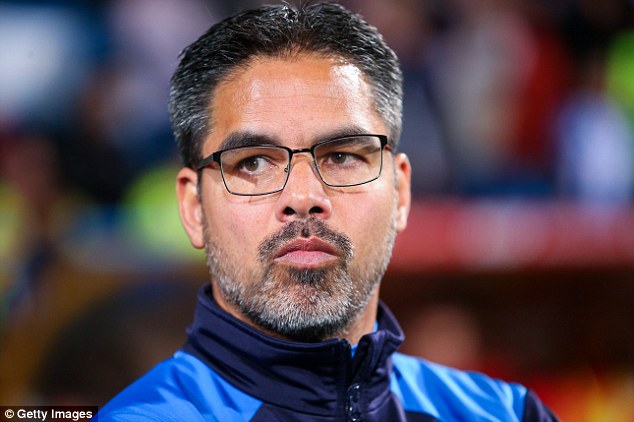
David Wagner and Dean Hoyle are a match made in heaven – their shared idealism only surpassed by their unrelenting hard work combined to create a modern miracle. Astute utilisation of resources – picking up the right characters on a tight budget, innovative fitness and training methods and intense motivation – have given the fans of Huddersfield Town a rare season of joy and success unimaginable since the early 70s.

Soon, we shall see how they intend to climb the next, even more daunting, mountain but, for now, the town can revel in the remarkable achievements of a united, vibrant club who have overcome massive odds. And we have.

(Thanks for reading throughout this season – bar my own, personal, winter break! – and have a great summer).

Epic schadenfreude

IMG_0400

The story of Huddersfield Town’s remarkable season has just one chapter left following a nerve jangling, thrilling and epoch making night at a febrile Hillsborough.

Like all good books, the tale has been stuffed with plot twists, massive characters and the occasional villain (Stuart Webber, for example) and the denouement will remain unknown until the very end.

Exactly 22 years to the day since Town beat Brentford on penalties to reach Wembley, the parallels with that evening were resonant; entering the game as underdogs after a home draw, upper tier seating, watching a shoot out taking place at the other end of the pitch and a raucous following, but the challenge for today’s squad was of even greater magnitude.

Wednesday, who frustrated Town with effective but stultifying tactics in the first leg could be forgiven for feeling the job was almost complete. A sold out home crowd – which rarely lived up to its pre match billing as a cauldron – had the potential to freeze the visiting team in terror and the Owls undoubtedly contain individual talents of greater renown than their opponents; if only Carvalhal could, finally, provide them with the freedom of expression so evidently lacking in the first act.

Though more expansive – they could hardly be anything else – the early stages of a tense and tight drama suggested a long night in store as the visitors responded to Wednesday’s elevated intent with good possession and control, though a couple of high balls to Fletcher at the back post created moments of danger for the Owls, thwarted by Ward.

As in the first leg, promising possession largely evaporated once Town approached danger areas, but the confidence and calmness of the players was comforting to the hugely outnumbered but constantly noisy visiting fans.

Just short of the half hour, however, Mooy’s sublime ball to Van La Parra allowed the Dutchman to play in Wells behind the Wednesday defence to feed Brown. The Chelsea youngster could only steer his instinctive finish on to the post (it is possible that Westwood’s finger tips helped) but the move was greatly encouraging.

Wednesday came straight back and only Fletcher’s lack of pace when put through by the impressive Bannon diluted a moment of genuine danger to the Terriers – his dismal attempted ball to Forestieri was less forgivable and Town survived, only to be tested minutes later when an unmarked Hutchinson fired a volley way over following a free kick.

Somewhat wobbly at this stage, Town responded with a good move down the right. Smith’s slightly overhit cross was brilliantly taken down by Van La Parra who flicked the ball towards Wells. As the Bermudian touched the ball beyond Westwood, the Owls’ custodian appeared to make contact but the strong penalty appeals were turned down.

A nervy but compelling first half ended with the magnificent Hogg being booked for a crude foul on Forestieri, and the combative midfielder would spend the remainder of the game on something of a knife edge.

With neither side being able to assert dominance, despite the imperious efforts of Mooy for Town and Bannon for Wednesday, a stalemate looked increasingly likely to continue. Van La Parra’s pace and trickery had the home side constantly on their toes and he was involved in both of Town’s best moments, while Wednesday’s best option was probing a back post vulnerability which also created two chances.

Unfortunately for Town, the second half began badly as, after just 5 minutes, that back post vulnerability was finally exposed. An excellent cross from deep by Bannon fell perfectly for Fletcher who outjumped Schindler to head Wednesday in to the lead.

Hillsborough erupted as the hitherto tense Owls fans sensed the enormity of the goal; surely, now, their torture of 12 months ago was about to be erased.

Town had different ideas and, with some considerable character, began to boss the game with prolonged passages of possession creating presentable chances for Wells and Kachunga. The season long conversion problem could have weighed heavily in an intensely pressurised situation but driven by Hogg’s energy and the class of Mooy and Brown, hope was not lost.

Kachunga, who had looked a little tired following his Herculean efforts in the home leg, was replaced by Quaner and in less than a minute of his arrival, Town were level.

Picking the ball up in space, Brown played a sublime ball past Pudil and in to the path of the big substitute whose considered square ball was turned in (agonisingly slowly) by a combination of Wells and desperately defending legs.

It had been a long time coming but, at last, Town were rewarded for their superior possession based football which doesn’t create enough chances or, indeed, telling pressure, but has its own beauty.

Until the end of the 90 minutes, Town were clearly in the ascendant – even when Hogg was off the field being treated for a head injury – and the impressive Quaner fed Wells again only for Westwood to foil him this time. Right at the death, Wells may have done better when put through by Mooy but hesitated rather than shooting, allowing the busy Westwood the time to smother the attempt.

With that chance gone – and it was a genuinely good one – extra time proved much tighter as tired legs strived not to make the fatal error which could decide these seemingly inseparable teams.

The first 15 minutes were edged by Wednesday – Ward had to make a sharp if straightforward save from the hugely disappointing Rhodes (it remains a genuine mystery why Carvalhal believed replacing Fletcher’s aerial ability was a good idea) and Hefele made a tremendous block to prevent Forestieri scoring, yet again, against the Terriers. In response, a long range effort by Wells was easily gathered by Westwood.

Fewer of the Town players were wilting, however, and they came back strongly in the second period with Wells forcing another save from Westwood (inexplicably no corner ensued) and Holmes- Dennis, who had replaced an exhausted Van La Parra, and the excellent Lowe caused problems for the home side down the left as the visitors finished the stronger, but to no avail.

On to the agonies of penalties then, though Town had a Teutonic record in shoot outs before any of the current Germans had arrived and while most of the visiting support were dismayed at the competition being decided at the opposite end of the ground, those of us with Brentford memories from the top tier of the Griffin Park stand had the fleeting pleasure of deja vu.

Stepping up first, Lowe slammed a perfect penalty past Westwood’s dive and the advantage of going first, if you score, was sealed.

Hutchinson, who, like Hogg was slightly fortunate not to have received a second yellow card, stepped up next only to see his penalty slapped away by the overly maligned Ward (who had also made several good saves during the game and was much more commanding than normal).

At 2-0, Town were in the box seat. Hefele, Wells and Mooy kept up the pressure before the diminutive figure of Jack Payne strolled up with the chance to put Town through to the play off final. Unfortunately for the man from Essex, his well struck penalty was excellently saved by Westwood and sudden death loomed as our Argentinian nemesis strode forward.

Forestieri has become something of an obsession with Town fans from the day he dived for a dubious penalty to win a game late for Watford through his remarkable record of scoring against the Terriers in and amongst more theatrical diving.

Karma dictated that the pantomime villain would add a plot twist to the Huddersfield Town story and, sure enough, and to uncontrollable delight in the visiting stand, his poor penalty – comfortably saved by Ward who guessed the right way – ended the tightest of tight play off semi finals.

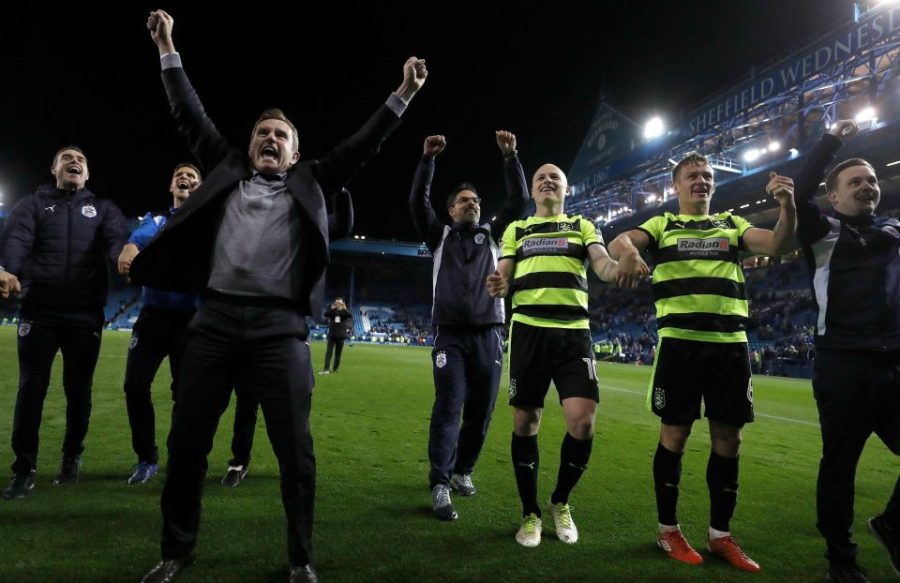
Unsure for a second or two that his save had prolonged the story, Ward’s realisation was followed by a sprint towards the away fans which will, surely, become iconic. He was chased all the way by team mates and staff as the final full stop was put on the penultimate chapter.

Town had taken 210 minutes and the drama of a penalty shoot out to get past a hugely difficult opponent. Their ambition always exceeded Wednesday’s on the pitch and they deserved their huge reward in the face of considerable odds, but that is the way they have rolled all season.

With Dean Hoyle’s inspirational leadership – not just this season but ever since he took over – and Wagner’s genius (many doubted his philosophy of preparing for this separate competition), the wait for the final chapter could be unbearable but you know that the script is going to be remarkable, whatever the outcome.

Reading, the final hurdle, will be tough, well organised and dangerous opponents and two close encounters during the season points to yet more attritional and exhausting watching. Both teams have achieved against the odds with innovative managers and remarkable numbers of single goal victories and the game is incredibly difficult to call.

Whatever the result, an already fantastic season has been elevated to legendary status as we await the final instalment with frenzied anticipation.

See you all at Wembley.

Toothless Terriers stifled by anti-football

IMG_0399


In the end, an entirely predictable first leg stalemate perfectly exemplified the home team’s entertaining way of scoring too few goals and the away team’s dreadful methods of keeping them out.

Backed by a raucous home crowd – which is far from a given with a noon kick off which generally mitigates very badly against atmosphere – Town probed the Owls’ impressive defences for virtually the whole game but were unable to create enough chances to turn their dominance in to a first leg lead.

Neither did their overwhelming possession create the type of intensive pressure under which teams can crumble, but their superiority with the ball did completely nullify the visitors’ major players and substitute keeper Coleman had an easy and less than eventful afternoon; he put in a couple of dives as he watched two long range efforts from Reach and Bannon veer off target.

The only other moment of danger Wednesday created was a decent cross which the excellent Kachunga headed over before Reach could pounce.

For the most part, Wednesday were content to stifle Town’s threat and rarely wobbled in their dull but tactically astute endeavours. On the one occasion Town got a lucky bounce in the area, Westwood pulled off an excellent save from Wells (he also tipped over an imaginatively unthreatening lob from the same player earlier).

An off balance Brown diverted a Wells flick on on to the bar in the first half, but Westwood was to be relatively untroubled as his 10 colleagues largely nullified their far more expansive hosts once the ball got to the final third.

On the positive side, Town looked much more like the team which has over achieved significantly over the season than it had towards the end of the campaign when genuine fears of burn out were regularly levelled at some desperately poor displays.

Fielding by far their strongest 11, the Terriers were boosted by the return of Kachunga who worked tirelessly before being substituted. He made life very difficult for Wednesday’s otherwise very composed defenders and Smith (who had gone off the boil perhaps more than any other player) returned to much better form with his regular partner in front of him.

Mooy and Hogg’s partnership flourished again, with Hogg’s energy superbly dovetailing with the Australian’s return to form, and, in front of them, Brown showed flashes of the quality which may yet fire Town to Wembley; particularly if Carvalhal’s stifling tactics are loosened at Hillsborough.

Though rarely stretched, Town’s defending – from back to front – was unrecognisable from the messy, mistake strewn ill discipline at the back end of the season with Hefele and Schindler easily containing a strangely quiet Forestieri who looked like he has been restored too early following injury problems. Fletcher’s aerial threat was almost entirely neutered and once those two made way for Rhodes and Winnall (oh for Wednesday’s bench!) the visitors had given up any pretence of wanting to establish a first leg lead.

With the game being refereed reasonably well, Wednesday were unable to call upon the outrageous fortune which lead to their regular season double over Town – close encounters which should have yielded 2 points a piece – though Jack Hunt got away with a fair amount for only one yellow card and the farcical handling of a situation where a Wednesday player handled the ball in the wall at a free kick before feigning facial injury was pretty questionable.

Collin Quaner provided a comedy moment with his first touch, which saw an attempt at control deflect off both of his uncoordinated legs in to touch, and little else which rather exposes Town’s main problem – beyond the 11 on duty from the start, there is little game changing ability on the bench; success, if it is to come, and much like the rest of the season will be down to very thin resources. Thankfully, no injuries were sustained threatening our main team – the excellent Lowe was suffering cramp rather than a hamstring problem.

There is a hope that Wednesday will have to be more expansive at home allowing us more space, though anyone who saw the Hillsborough fixture during the season knows that there is little chance that Carvalhal will suddenly turn gung ho – he is, probably rightly given our failure to score against his team after 3 tries, going to remain happy with us dominating possession in non threatening areas because he trusts, again rightly, the quality of his defence.

Having spent significantly over the past two years, including the addition of Rhodes and Winnall in January, the entertainment free zone they present on the pitch is not particularly edifying but they start the second leg as clear favourites to reach Wembley. However, it is possible that genuinely progressive football – all be it too lacking in cutting edge – can defeat the anti- football preoccupation of the Portuguese, and Town will not enter the game with fear or without hope.

On to Hillsborough…..

Town lull rivals in to false sense of security. Or something.

IMG_0398

A powerful, aggressive, Warnock inspired Cardiff overwhelmed a cautious and mistake riddled Town side with bigger things on their minds on an afternoon to forget for the hosts.

Reverting to a near full strength side, fear of injury or suspension pervaded a dreadful performance from the Terriers who gave the clear impression they wanted to get the game out of the way and probably hoped that their opponents were similarly unmotivated. Predictably, given their manager, that hope was cruelly dashed.

From the very beginning, sluggish and careless passing handed every initiative to the Welsh side who should have been 3 up within the first 15 minutes. Had Hoillett not drifted offside when played through by Pilkington following a poor ball out by Ward, the visitors would have capitalised on their hosts’ nonchalance within the first minute and the errors piled up in a woefully inept first half.

It didn’t take long for the Bluebirds’ overwhelming early dominance to bring reward. The impressive Zohore latching on to an excellent Pilkington through ball to easily outpace Hefele and slot past Ward.

With his only positive contribution to the day, Ward launched an excellent upfield punt for the unmarked Brown, only for the loanee to be caught just before pulling the trigger, but this was rare respite from Cardiff’s superiority and further chances fell their way with alarming regularity.

The disastrous early stages were capped by the dismissal of Ward. It is a toss up between Mooy’s terrible back pass and Ward pointing to his shoulder after clearly handling outside his area for laughable moment of the day and there were many contenders. There may be some mitigation of Mooy’s error, however – it is possible that the over watering of the pitch is interfering with our game, whether that be the players slipping against Fulham or affecting the judgement of pace when passing (such an error by Mooy is so rare as to be remarkable).

Without Ward’s ill advised and indecisive charge from his line (he pondered for a second or two first, as his wont at times), Zohore would have added a second that Cardiff’s fluency and energy would have deserved, but the Dane didn’t have to wait long before he set up Joe Bennett for an excellent strike past Coleman; neither did he have to work very hard to circumvent Town’s stagnant defence to get in to position with Mooy and Hefele easily bypassed.

Down to 10 men – Scannell being sacrificed when, ideally, the injury hit Londoner needed game time – and trailing to a massively superior side, damage limitation became the priority. While a much heavier deficit would have been little more than Cardiff deserved, a Smith/Brown combination created a great chance for Quaner to halve the deficit just before the break but the German, who worked hard on the scraps thrown at him, brought an excellent save from Murphy.

Town offered little else in a first half where they were far too easily bullied and the folly of playing at less than full tilt against any Championship side had been painfully exposed. It could also be argued that injury avoidance strategies can easily turn to disaster – playing at full tilt, quite rightly, one or two Cardiff challenges shook the recipients far harder than they normally would; being under par both physically and mentally arguably leaving every player more exposed to damage.

An entertaining opening to the second period saw Cardiff cut through Town’s rearguard yet again only for Pilkington to finish weakly and a decent interchange between Brown – who, encouragingly, shone from time to time – and Quaner allowed the former to release Van La Parra. The otherwise dreadful winger nearly reduced the arrears with a clever chip but was just off target.

Cardiff remained vastly superior, however, and were helped in particular by the sluggish and under cooked Hefele who delivered his worst display of the season by a distance – slow to react, poor positioning and half hearted tackling were so out of character that there was some comfort that, perhaps, it was a mind set rather than an ability issue.

Further chances eluded the visitors until Zohore – who would be perfect in this Town squad – turned Lowe inside out before feeding Bennett for his second and Cardiff’s third.

In truth, few cared by this point other than the celebrating Cardiff fans who clearly enjoyed their last day of the season, and other than a decent Town move which saw Quaner miss the target following a Mooy cross, the game petered out as even Warnock seemed to lose interest, telling his players to calm down at one point.

The inconvenience of having to play the final game of the season was palpable, and a mainly flat atmosphere (common for noon kick offs, worryingly) seemed to signal impatience at the damp squib of the final few games when a play off place was already obvious even before confirmation at Wolves.

Time will tell if David Wagner’s transparent strategy of replicating a pre season before the play offs, and on the face of it such a plan seems not only reasonable but eminently sensible, is successful but playing at less than full pace, intensity and discipline brought predictable results.

The loss of Ward for one game is not a disaster unless his perfectly adequate replacement succumbs to injury, the hugely important Brown came through the game unscathed (though squaring up to Morrison after a robust challenge could have resulted in disaster had it escalated) and the focus can now be turned fully on a very difficult play off semi final.

It is a shame that we have been unable, maybe even unwilling, to build momentum in to the post season competition but history shows that form doesn’t necessarily have to be good to succeed.

And so to the joys and agonies which await.
Marti

Keep right on…..

IMG_0397

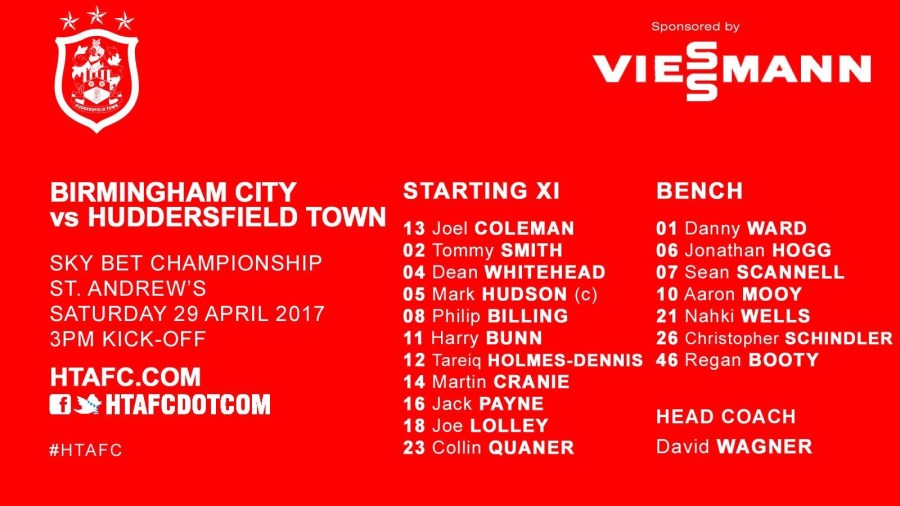
In an entirely predictable and eminently sensible move, David Wagner began his preparation for the play off campaign with a full on rotate which saw 10 changes to the side that secured the season extension on Tuesday.

Of all the 16 players picked for the match day squad against struggling Birmingham, all but one (Regan Booty) have contributed to the club’s success this season, and many of them provided the club with a rare cup run including holding a Manchester City side of obscene talent to a goalless draw. It should also be said that one of the changes, bringing Smith back, restored a first choice to the team.

While others still had work to do to secure play off positions, Town’s perfect use of their game in hand provided an advantage that they, as significant underdogs for the upcoming competition, would have been both stupid and negligent to foresake.

An injury to Billing at the hands of a fired up Blues player (the challenge was entirely legal but robust), was further justification for keeping key players out of the fray and the only real disappointment was the performance of players who should have been trying to force themselves in to contention for the important games to come.

Town started relatively brightly with lots of control and possession against a tense looking home side who brought physicality to a game they had to win but little finesse, other than their pacy right winger.

In fact, overall, Town were much the better team for most of the first half and good efforts from Holmes-Dennis and Billing as well as decent marauding by both full backs deserved goals but all of this was undone by a poor mistake by Hudson, who endured a pretty terrible first half.

First, he brought down Adams when little threat was apparent and at a stage where Birmingham had rarely escaped from the control Town were exerting over the game. Fortunately for the veteran – surely moving to his coaching role (which he will be very good at) next season – young Coleman was able to easily save Jutkiewicz’s tame attempt.

Just before the half time break, though, he was not so lucky. Birmingham had been winning too many cheap free kicks to throw in to the box to little effect when a back post ball which should have been easy to deal with was headed back across his own goal by the hapless Hudson and Grounds hungrily accepted the gift.

At this point, Birmingham had been reduced, harshly, to ten men when Adams fouled Cranie. It was a foul and a booking but Mike Jones is firmly in the look at me strain of referees and brandished a completely unnecessary red card.

Until the goal, Town had played reasonably well and Smith set up both Payne (who missed the ball completely in front of goal) and Bunn (whose chance was more difficult as he was wider) and coped more than adequately with whatever Birmingham could throw at them, which wasn’t a great deal.

One man was, however, completely anonymous. Lolley contributed very little to events and still looks a long way from being the exciting winger that may be in there somewhere. You suspect that the end of the season can’t come quickly enough for him and only major problems in the play offs will result in his appearance.

The second half was hugely disappointing. Despite dominating possession – which was to be expected against ten men – transition was painfully slow, Quaner, who had a decent first half, suddenly became a clumsy pastiche and the visitors became vulnerable to the break.

Coleman had to make an excellent save – he was one of the few positives to come from an ultimately grim afternoon – to deny the home side after one breakaway and as they became increasingly comfortable defending against monumentally slow build ups, the noisy home crowd could sense a victory quite a while before another raid saw Smith only half tackle on the edge of the area and Whitehead tripping Maghoma for the Blues’ second penalty which, this time, was converted.

Wagner’s change of shape in the second half – reverting to 3 centre halves – robbed his team of the forward play of Smith and Holmes-Dennis which had so nearly paid dividends on 3 occasions in the first half. With Lolley ineffectual and Bunn regressing after a reasonable first half, Birmingham comfortably dealt with Town’s attacks and the visitors rarely looked like scoring.

Seeing out the game with some ease, Birmingham collected 3 vital points while Town opened themselves up to an ill informed and sensationalist media and lost Billing for the play offs. Not a massively successful day, then, but in the long run the rest afforded to the players who will compete in May was far more important.

Billings injury was further confirmation of Wagner’s wise choice (this is after reflection and didn’t seem so admirable when navigating horrendous Birmingham traffic afterwards) – the triumvirate of Mooy, Hogg and Brown in particular will be essential if Town are to further defy the odds post season, and though the Australian played a small (largely ineffective) part at St Andrews, his style of play is far less susceptible to injury than the other two.

Forest and Blackburn – both of whom have cheated by falling foul of FFP in the past – will no doubt continue to bleat, but their plight is nothing to do with the ambitions of Huddersfield Town and Wagner has earned the right to plan for the next few weeks in the best interests of his employers. He will, rightly, pick a team with least possibility of harming the play off chances against Cardiff and he will be right to do so.

Wolves tamed as Town secure remarkable achievement

IMG_0396

An heffing dream was turned in to reality last night as Town returned from their traditionally happy hunting ground of Molineux with 3 play off confirming points and an achievement which will live long in the memory.

The game itself was of poor quality – Wolves’ desire on and off the pitch was intermittent to say the least, while Town’s nervousness in a seemingly endless second half created nail chewing anxiety throughout their (rather disappointingly small) support.

With Smith and Kachunga missing, Cranie and Scannell were drafted in to the right side with Wells restored in place of Quaner. More significantly, Brown took his place in the starting line up for the first time since his injury – arguably the difference between a post season competition and automatic promotion.

The home side line up was missing Costa and Cavaleiro and the lack of creativity and pace was evident from the start as Town quickly took control of the game. The lack of atmosphere in a half empty stadium – Wolves fans’ apathy was only interrupted when Van La Parra was on the ball – favoured the more energised visitors, and without threatening to reach the heights seen at other grounds this season, a competent first half display was to prove decisive.

With Ward barely troubled – Wolves should probably have done better with one headed chance straight at him – Town created very presentable chances, particularly for Wells who curled a great opportunity over the bar.

Solid at the back, with Schindler and Hefele putting their Fulham nightmares behind them throughout, Town’s overall superiority was confirmed when Brown, who added considerable skill and zest to the thankfully restored Hogg/Mooy partnership, took a pot shot from outside the area which was well hit but rather surprisingly eluded the Wolves keeper.

Taking a fully deserved lead over lacklustre opponents in to the break, Town simply had to hang on to secure a deserved play off berth.

A slow start to the second half began to jangle the nerves as they allowed Wolves too much time and space and passing became sloppy. Conceding the effortless control of the first half, the game became more of a contest and as Cranie picked up a knock and Scannell tired, Wolves threw on Graham to capitalise on the weakness.

The substitute, clearly welcomed by the hitherto snoozing home crowd, gave Wolves a lift with his exploitation of space and for ten minutes, Town wobbled. Ward came to the rescue with a fine save from Weimann but could only breathe a sigh of relief when Edwards struck the post with the follow up.

Graham caused more consternation to the increasingly anxious visiting fans but, in truth, his delivery rarely matched the perceived threat and, with Hogg patrolling in front of the comfortable pair of Germans behind him, the likelihood of a home equaliser receded in to the eerie silence from the stands.

Town were boosted by the arrival of Bunn in place of Scannell as he not only provided better cover for Cranie but instigated forward momentum which should have resulted in a tension relieving second goal, with fellow substitute Quaner (on for the hard working Wells) spurning good opportunities. Hefele could also have ensured a much more comfortable final 10 minutes but fired wide from a perfect position.

Watching between fraught fingers, the time slipped by very slowly but the sight of Wolves fans leaving well before the end was, at least, some small comfort – they knew that, barring something extraordinary, their team was toothless and increasingly inelegant in their attempts to rescue a pretty meaningless point.

A mundane yet historic victory was sealed when Town comfortably saw off 3 minutes injury time and the celebrations for an extraordinary season could begin.

It has been a patchy and occasionally worrying crawl to the line, but the return of Brown – utterly pivotal to this win – and the recalibration of the team’s shape augurs well for the trials to come. The win was also achieved without the Smith/Kachunga collaboration – their deputies did well (until injury and tiredness affected them) but deputies they will remain.

There were fewer Town fans there to witness it than there should have been – the £30 price tag cannot have helped – which slightly detracted from the evening, but the scale of the club’s achievements cannot be understated given the budget, the competition and the base from where they started.

With 2 games to go, Wagner has more planning time than his competition – an advantage which should not be underestimated given his towering achievements to date.

The job is not done, and the future in the hands of fate but, by God, there can’t be a better story in the English leagues this season.

Frailties exposed by Cottagers

IMG_0395Slick, ruthless Fulham exposed the latent weaknesses of a Town side who have punched well above their weight for much of a memorable season.

The loss of key players for periods on the final mile of the marathon has caused disruption in more ways than just absence. An earlier, enforced, break up of the Mooy/Hogg axis has been superseded by a voluntary and tactical hiatus which continues to backfire very badly. With the foundation stone of many victories removed because no other answer to the number 10 role has been tried, David Wagner’s insistence on playing to one particular style has started to look less brave and more obstinate.

He wasn’t helped by Kachunga’s absence through illness; made doubly hazardous by a naive performance by Lolley which more than indicated that the Brummie is some way out of his depth, both in thought and execution.

It all started so well. Retaining possession with some ease against the initially lethargic visitors, a superb cross field ball by Hefele was (for once) headed on first time by Van La Parra to the raiding Lowe who was brought down clumsily in the box. After Town’s recent problems with penalties, it was satisfying to see Lowe despatch his with aplomb – a skill which may well be in demand in the not too distant future.

Fulham woke up pretty soon afterwards and began to exploit Town’s right hand side where Malone ruthlessly exploited Lolley’s lack of positional awareness without any sign of response. Smith, hopelessly exposed and performing some way below his season standard himself, lambasted Lolley for his errors but to no avail. The tactical mess on Town’s right was not addressed in a disastrous first half.

On the ball, Town seemed fine for 10 to 15 minutes, but a storm was brewing with Fulham’s extra quality beginning to tell. Comfortable on the ball throughout the team, their sharpness allied with pace and excellent decision making was about to rip the home team apart.

First, lack of effective challenges around the box – Hefele, in particular made a very poor effort on the edge – allowed Fulham to work the ball out to Malone who outstripped Lolley with ease to fire home in to the far corner.

In the face of an energised opposition, Town crumbled. Fulham’s early reluctance to press was swiftly abandoned and coupled with their movement and invention, a chasm in class opened up.

The architects of Town’s opener then combined to make a hash of what should have been a straightforward headed clearance which set the dangerous Alite free to run at them. Lowe was sidestepped, Van La Parra made a weak attempt at a tackle before Hogg came in to bundle the Fulham winger over for an inevitable penalty which Cairney executed perfectly.

More calamity always looked likely as Fulham slipped in to impressive cruise control. Dominating the ball, creating space down the flanks with incisive passing and movement, the visitors looked on a different plane to their shell shocked hosts and a third, deserved, goal was always likely.

There was an element of fortune to the third goal when a Sessegnon shot was blocked by Schindler in to the path of Johansen, but his finish was sharply clinical.

For a brief period after the third goal, Town recovered a little and occasionally put together some decent football – largely instigated by the hard work of Quaner, possibly the only Town player to come out of the game with some credit – and both Schindler and Billing went close with headers which may have changed the course of the game.

Any thoughts of an unlikely comeback were extinguished, however, as half time approached, and it was yet another self inflicted wound. Slipping on an over watered surface (even the external, environmental problems surrounding our pitch conspired against us), Schindler could only play a poor ball inside to a pressed Hogg, who was robbed by Johansen to put the game to bed.

Fulham’s intensity, after a bafflingly somnolent start, had overwhelmed a disjointed, error prone home side, and if there was a consolation, the home crowd (largely) did not react badly as the players trudged off. Some booed, of course, but there was more an air of resignation that a clearly superior side had a winning lead that they had deserved.

The second half is barely worth reporting upon. Fulham slipped back in to a pretty effortless containment while creating some very dangerous moments which could and should have heaped more embarrassment on the home side.

Quaner, whose unusual style is taking some getting used to, worked hard to create two presentable chances but a home goal in a scoreless second half would only have served to apply lipstick on to a pig.

Maybe now, expectations will be moderated to more realistic levels. Fulham look very well equipped both for the play offs and, eventually, the demands of the Premier League. Town looked entirely the opposite.

With Leeds losing, the opportunity for both sets of fans to chant their derision of our neighbours was some consolation, but the schadenfreude seemed a little out of place for home supporters who had seen their team comprehensively dismantled. Still, results elsewhere, including Reading losing, mitigated the loss to some extent, even if it feels like a straw being clutched.

It was also good to see the return of Brown who looked good without excelling – his return should stabilise the midfield disruption Wagner has wrought in a failed attempt to shoehorn Mooy in to the number 10 role.

Two difficult away games now loom – Wolves are a very dangerous side on their day, as Fulham found out recently, while the end of Zola’s disastrous tenure at St Andrew’s may lift the Blues – and Wagner will, surely, play his best eleven to secure the 2 points needed to extend the season.


Penalty drama gives Town the big mo.

IMG_0394


A game which was a little short on quality but far from lacking in excitement pitted two very different styles in combat and produced a breathless finish which tightened Town’s grasp on a play off place.

The result banished the woes of recent defeats without entirely dispelling the feeling that the squad is creaking with the rigours of a remarkable season, though the mental strength needed to overcome a robust Preston side who, undeservedly, had drawn level late on with a rare chance was both admirable and encouraging.

Like Burton before them, but with more guile and a sprinkling of quality, the Lilywhites presented a physical challenge which straddled the line between professionalism and cynicism uneasily. The approach is legitimate from a club, like Town, trying to find a way to counter the spending power of bigger rivals and their own play off ambitions have only now been extinguished with 2 visits to West Yorkshire in a week.

A far from perfect refereeing performance by the strutting Lee Probert, clearly more used to being on television on the biggest English stages, just about kept the visitors’ less savoury traits under some discipline, though the leniency he extended to one or two of their players – Pearson, in particular – meant his control over proceedings was never entirely authoritative.

Dominating the first quarter of an hour, Town’s early superiority failed to produce clear cut chances but served to shake off the cobwebs from last week’s lacklustre display at Forest.

Old boy Tom Clarke went off injured to a good reception from home fans who remember him with affection, but his team were ahead soon afterwards with a rare attack ending with an excellent strike from McGeady – Preston’s stand out player on the day. Though allowed too much time and space, the Everton loanee’s shot flew past Ward, curling well beyond his reach.

The goal, massively against the run of play however well executed, threatened to expose Town’s fragility given recent results but, to their credit, the home team simply carried on as before and, in the face of increasingly robust defending, continued to probe with intelligent possession.

Ten minutes from half time, Billing was lost to injury. His height had been useful against a team whose main threat came from the air and he had played his part in starving the visitors of the ball, but there was a sense of blessing in disguise when Mooy was reunited with Hogg to revive a partnership which has been a massively important foundation of the success achieved to date. That he was replaced by the diminutive Payne slightly tempered that – a physical battle isn’t necessarily the perfect environment for the Essex lad.

The equaliser, when it came, was laced with irony.

Having been destroyed in the air at Deepdale, the thought that a corner would produce a goal seemed ludicrous and, indeed, 3 previous ones had delivered no threat whatsoever. With the half time break looming, Mooy curled a deep cross over from the set piece which Preston’s keeper misjudged completely to allow Kachunga to head home a deserved equaliser.

Going in level was important and the least Town deserved against a rugged opposition largely lacking finesse or imagination. Rather than a deficit playing on dressing room minds, they could start again and make the revised system caused by Billing’s injury work.

If anything, Preston’s offending increased in the second half and Probert’s indulgence rose proportionately – it appeared that tugging back Wells and Van La Parra was fair game most of the time and, like Burton before them, the Lancastrians were allowed to interrupt the flow of the game far too readily.

Despite more dominance, Town were unable to fashion clear cut chances as well organised Preston’s defensive block thwarted any promising play but with overwhelming possession, the home side continued to probe.

Lowe fouled an opponent near the dugouts resulting in a minor fracas which finally got Pearson booked – despite rash challenges, the nearest he had come was a captain attended ticking off, a courtesy not extended for Lowe’s first transgression.

2 further Preston bookings followed as the visitors began to show signs of fading and all of the play – other than a breakaway following an ill executed corner routine which was brilliantly foiled by Hogg – flowed Town’s way.

On 70 minutes, Town took a deserved lead when Wells – who worked hard in the face of some rough treatment – floated a great ball over to Smith, marauding with menace for once in a below par outing, and a first time ball deflected off a defender, looping up invitingly for Payne to head home (more irony).

Looking to play out the game in comfort, Town maintained their dominance without looking like adding to the score but were hit by an almighty, and demoralising, sucker punch with 10 minutes to go.

Several opportunities to intervene and break up a rare Preston foray were missed before the ball found its way to Barkhuizen to cross for Hugill to head home powerfully from short range.

With two attempts, Preston had scored twice – a very good strike and capitalising on some loose defensive work – and just 3 minutes later, Hugill could have completed the turnaround but put his header from a similar range as the equaliser over the bar.

A winner for Preston would have been a terrible blow in the context of a tricky run in; sowing doubt and despair in to an already flat run and jeopardising the play off place Town undoubtedly deserve.

A point would, at least, create some form of momentum but, in this extraordinarily unpredictable division, late drama was to provide the Terriers with all 3.

With the visitors hanging on for a draw, Town made most of the running in the final stages but looked unlikely to convert possession in to goals. Quaner replaced Wells just before the board was put up to indicate 4 minutes added time, and midway through the extension, a Payne won free kick fizzled out and play retreated towards the half way line.

In the aftermath, however, Hugill – brought back to defend the free kick, clashed with Kachunga leaving Town’s top scorer in a heap in the area. To Probert’s credit, he kept an eye on events while play went upfield and called the game to a halt.

Most of the crowd didn’t see Hugill’s push and stamp, only the frenzied appealing of Hefele over the prostrate Kachunga. Taking his time and assessing the evidence in front of him, Probert booked Hugill and this could only mean one thing which was confirmed as he pointed to the spot.

Had the boot been on the other foot, our protests would have matched those of Grayson, his players and the visiting fans, but, as beneficiaries of the decision (which would have been easier to ignore in fairness to the referee), the fact that the ball was well away from the area does not preclude punishing an assault in it and can be vigorously defended.

Getting the penalty and converting it are not the same thing however. Town’s problem with both gaining and scoring them has dogged us for several years, and the curse seemed to strike again as Mooy’s decent attempt was well saved. However, Quaner was on hand to slot home a not altogether straightforward chance on the rebound and a massive win was achieved.

Town deserved the points for their application in the face of a very aggressive, difficult opponent who continue to be a force in this unrelenting division. While never reaching the heights of early and mid season, and possibly benefitting a little fortuitously by the enforced reunion of Mooy and the excellent Hogg, they didn’t let their heads drop after the blow of the equaliser and an ecstatic crowd – who had also backed the team impressively in adversity – were treated to a joyous Quaner celebration.

The missing link of Brown/Palmer continues to blight Town’s transition play – despite his goal, Payne was nowhere near as influential as the two Chelsea loaners can be – and the return of one or both can’t come quick enough to get us over the line and confirmed for the post season lottery.

With results elsewhere, the magnitude of the win was confirmed – a collapse could still precipitate disaster but this looks increasingly unlikely and (whisper it) there remains a very slim chance of capitalising on any Newcastle implosion following their own last minute woes in the late game.

One more win needed.

Town fail to see wood because, Trees.

IMG_0393

For the third time in four games, Town succumbed to a team fighting to stay in the division as they wilted in beautiful Spring conditions under an onslaught delivered by an impressive Forest who performed far beyond their league position.

Harried to the point of exhaustion, Town rarely got in to their stride and their usual fluency and instinctive possession based style was severely disrupted by an aggressive, determined and unified home side who rendered much of the visitors play mechanical, predictable and tired.

Even Hogg – the rock upon which the victory over Norwich was built – struggled in the face of Forest’s relentless energy, which lasted the full 90 minutes and gives great hope to the City Ground faithful who haven’t had much to cheer with apparently haphazard ownership and uncertainty over the past year or so.

Solid at the back, hard working in midfield and often dangerous on the flanks, Forest earned their victory with high levels of energy which prevented Town gaining any momentum and, sometimes, you just have to hold up your hands when defeated by a superior force on the day.

Town’s play, which didn’t start out too badly, became increasingly laboured and the absence of a quality number 10, as in other games recently, was painfully obvious. Mooy can play that role, as demonstrated in the second half on Wednesday, but it deprives the team of his close partnership with Hogg and when Billing is as languid as he appeared for certain portions of this game, the dynamics of the team are diminished.

This is, perhaps, to take too much away from Forest who dictated in all areas of the pitch and, but for two magnificent saves from Ward, a goal line clearance from Wells and wayward finishing, could have inflicted a very heavy defeat on Town, who would have little room for complaint.

In a first half dominated by the home side, Town had one decent chance for Kachunga following good work from Wells and an easily saved shot from Billing while the other goal was under siege. The early threat came down Town’s left with Holmes-Dennis – deputising for the rested Lowe – caught out once or twice before settling, but it was down the usually reliable Smith’s flank that Forest found most joy.

Twice, the home side outnumbered Smith to create very presentable chances. Ward, initially too hesitant in the challenge, managed to thwart the impressive Osborn at his near post but was beaten by a Worrall header only for Wells to clear impressively from under the bar. Brereton then failed to convert an excellent low cross from Ward, but the pressure was too much for the visitors when yet another foray down the left saw Brereton provide Lichaj with a tap in for a deserved lead.

In his pre match interviews, David Wagner had insisted that Forest had no surprises in their locker and pointed to their ability to score and vulnerability at the back. Being mostly right all season, he could be forgiven for being completely wrong for this encounter. As he admitted afterwards, Forest DID spring a surprise by playing 3 at the back and overloading midfield, while their forward line failed to put Town away in a dominant first half and their defence was rarely troubled.

With two changes made at half time to even up the midfield by sacrificing a full back (Holmes-Dennis who, in fairness, was more effective defensively than Smith) for Whitehead and replacing the rather peripheral Van La Parra with Lolley.

While far from glimmering, Town gained a little of their customary control at the beginning of the second half without causing serious threat to Forest’s lead and there seemed a little hope that they could build a foundation to rescue something from the game if they could undermine the home side’s high confidence levels.

However, and even in this brief period of competing more effectively, Forest created the best chance when Ward, unmarked in the box, screwed his effort wide.

The all too brief, and largely illusory, period of parity was abruptly ended by a mix up between Whitehead, who ballooned a defensive header, and Schindler, who failed to react to Ward nipping in and advancing on his namesake before finishing the chance and the game.

A couple of long range efforts aside, Town couldn’t match Forest’s determination and energy and a deserved defeat was assured long before the final whistle.

A late appearance by Quaner offered little and Town desperately need the boost of a Palmer and/or Brown return if they are to safely negotiate some tricky fixtures and secure their play off place.

Revitalised, Forest look well equipped to secure their Championship status and, if we are ultimately unsuccessful in our promotion challenge, Nottingham is always a pleasurable away day even if the football can intervene to put a damper on it.

The worry is that after apparently banishing the thought that Town are beginning to run on fumes with a good victory in midweek, the uncertainty has returned with this lacklustre display. The chances of a complete collapse still seem slim, but form remains worrying, Norwich (who bounced back quite strongly!) notwithstanding.